AI generated this summary from the Hebrew recording. No human has checked it, and it may contain errors. The recording is the authoritative source.
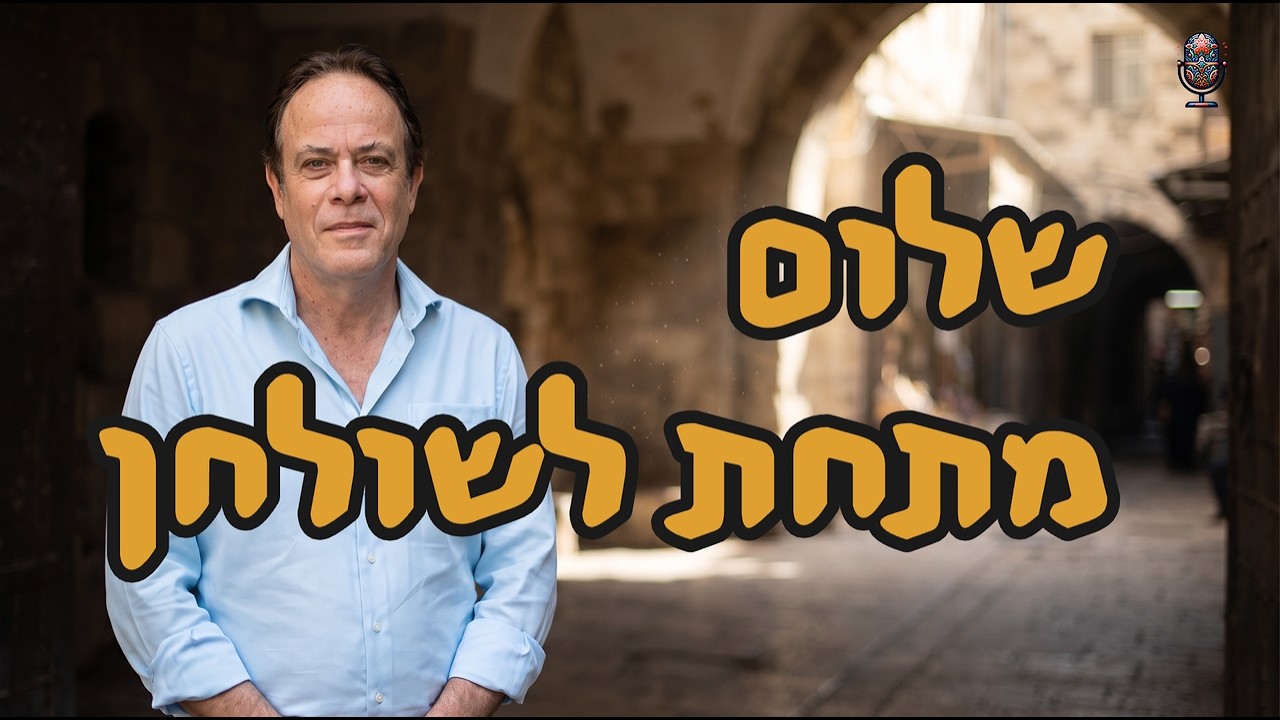
This episode’s guest is Prof. Eli Podeh of the Department of Islamic and Middle Eastern Studies at the Hebrew University and a member of the Mitvim Institute. Prof. Podeh surveys the history of the secret ties Israel maintains with Arab and Islamic states, a topic he wrote about in his book “From Mistress to Common-Law Wife.” He explains why many countries preferred to maintain relations under the radar, why Israel agreed to this, and how the Abraham Accords and the October 7th war have affected this pattern of relations.
Read the full episode summary
Behind-the-scenes ties
According to Prof. Eli Podeh, the perception that Israel was completely isolated in the Middle East is inaccurate. Throughout its existence, Israel has maintained extensive and secret ties with many countries in the region. His book, published in 2020, examines this phenomenon. He notes, for example, the United Arab Emirates, which has had ties with Israel since the 1990s, and Morocco, whose ties began as early as the 1950s around Jewish immigration and evolved into extensive intelligence cooperation with the Mossad starting in 1963. The cooperation with Morocco included Israeli assistance in the Ben Barka affair and giving Israel access to listen in on Arab summit conferences held in the country. According to him, most research on Israel’s relations focuses on public documents from official archives, but information on secret activities, most of which were managed by the Mossad, remains classified. He collected the information for his book from various sources, including WikiLeaks documents and interviews with over a hundred people, many of them former Mossad personnel who were willing to talk about their activities.
Why in secret?
The main reason for the secrecy of the relations, explains Prof. Podeh, is the fear of Arab leaders that their legitimacy will be harmed. Public opinion in the Arab world strongly identifies with the Palestinian issue, and rulers, even in non-democratic countries, fear the public’s reaction. He mentions leaders like King Abdullah I, Bachir Gemayel, and Anwar Sadat, who paid with their lives for their ties with Israel. Even Gamal Abdel Nasser, the leader of the Arab world in the 1950s and 60s, maintained secret contacts with Israel but expressed fear of being assassinated if it were revealed. Therefore, the alternative that Israeli leaders faced was between having secret relations and having no relations at all. They chose the first option out of an understanding that it was in Israel’s interest, even if it involved frustration. Israeli representatives in the Shah’s Iran, for example, complained that Israel was providing a great deal of assistance to the country but was not receiving public recognition.
Leaks and the rules of the game
Sometimes, Israeli leaders are the ones who leak information about secret meetings out of a desire for political gain. Prof. Podeh gives the example of the leak of Benjamin Netanyahu’s meeting with the Saudi Crown Prince, Mohammed bin Salman, in 2020. According to him, such leaks anger the other side and can lead to a freeze in relations. He rejects the speculation that these are coordinated leaks, emphasizing that over the years it was always the Arab side that demanded secrecy be maintained. In the case of the Maronites in Lebanon, for example, they repeatedly asked to avoid publicizing the ties, understanding that they are a minority in the country and such publicity would endanger them. According to Shabtai Shavit, a former head of the Mossad, the secrecy is not absolute. Among intelligence communities, the information about the ties is known and creates deterrence, even if it does not reach the general public.
“A Byzantine court”: Who manages the ties?
The management of secret ties is not the domain of a single body. According to Prof. Podeh, from the late 1950s, a practice developed whereby the Mossad, through its “Tevel” division, is responsible for ties with countries with which Israel does not have diplomatic relations. However, there are other bodies that compete for the management of these relations, in what one of his interviewees called “a Byzantine court.” These bodies include the Ministry of Foreign Affairs, which is also interested in being involved in secret ties; the National Security Council (NSC); personal envoys of prime ministers; and the IDF, mainly Aman (Military Intelligence), which was involved in ties with the Maronites in Lebanon. The rivalry between the various bodies, Prof. Podeh argues, sometimes overcomes cooperation.
The Abraham Accords and the October 7th war
The Abraham Accords, argues Prof. Podeh, were a revolution because they brought the relations out into the open and were based on a new paradigm: peace with Arab states without the need to resolve the Palestinian issue. He admits that at that moment, this concept challenged the accepted assumption in academia that no significant progress could be made without addressing the Palestinian issue. However, the events of October 7th proved, to his regret, that the old assumption is still valid. One of the main reasons for the Hamas attack, as revealed in documents, was the desire to torpedo the emerging normalization with Saudi Arabia. The good news, he says, is that the peace and normalization agreements survived the test of the war. However, they have retreated to the old pattern of action of behind-the-scenes relations, without public meetings.
Ties with other countries
Prof. Podeh reviews secret ties with other countries:
- Saudi Arabia: He sees this as a historic missed opportunity. According to him, the Saudis, under the leadership of King Fahd, sought contact with Israel as early as the 1970s but were rejected by Moshe Dayan. The pattern of Saudi initiatives continued in 1981 and 2002.
- Sudan: A complex story that included ties with both the Muslims in the north and the Christians in the south, whom Israel aided in their rebellions.
- Pakistan: Secret ties existed, partly due to Israeli concern about Pakistan’s nuclear weapon. Israel received assurances that the weapon would not be turned against it.
- Indonesia: Between the 1970s and the 1990s, significant ties existed, including Israeli civilian aid.
- Kuwait: This is a country that almost never tried to establish contact with Israel, probably for fear of getting entangled, especially after the 1990 Iraqi invasion.
- Qatar: Described as the “rebellious child” of the Gulf, which manages ties with all sides and draws its power from its relations with the United States.
Humanitarian aid and support for minorities
Some of the secret ties included humanitarian aid and support for ethnic and religious minorities, like the Kurds in Iraq, the Maronites in Lebanon, and the Christians in South Sudan. According to Prof. Podeh, this aid was sometimes seen as a moral duty for Israel, as a minority in the region, to help other minorities. He mentions Menachem Begin, who believed in the idea of an “alliance of minorities” and saw aiding the Maronites as a duty to prevent them from suffering a fate similar to the Holocaust.
The original episode, in Hebrew: שלום מתחת לשולחן