When Your Code Is Avoiding the Question Your Startup Needs Answered
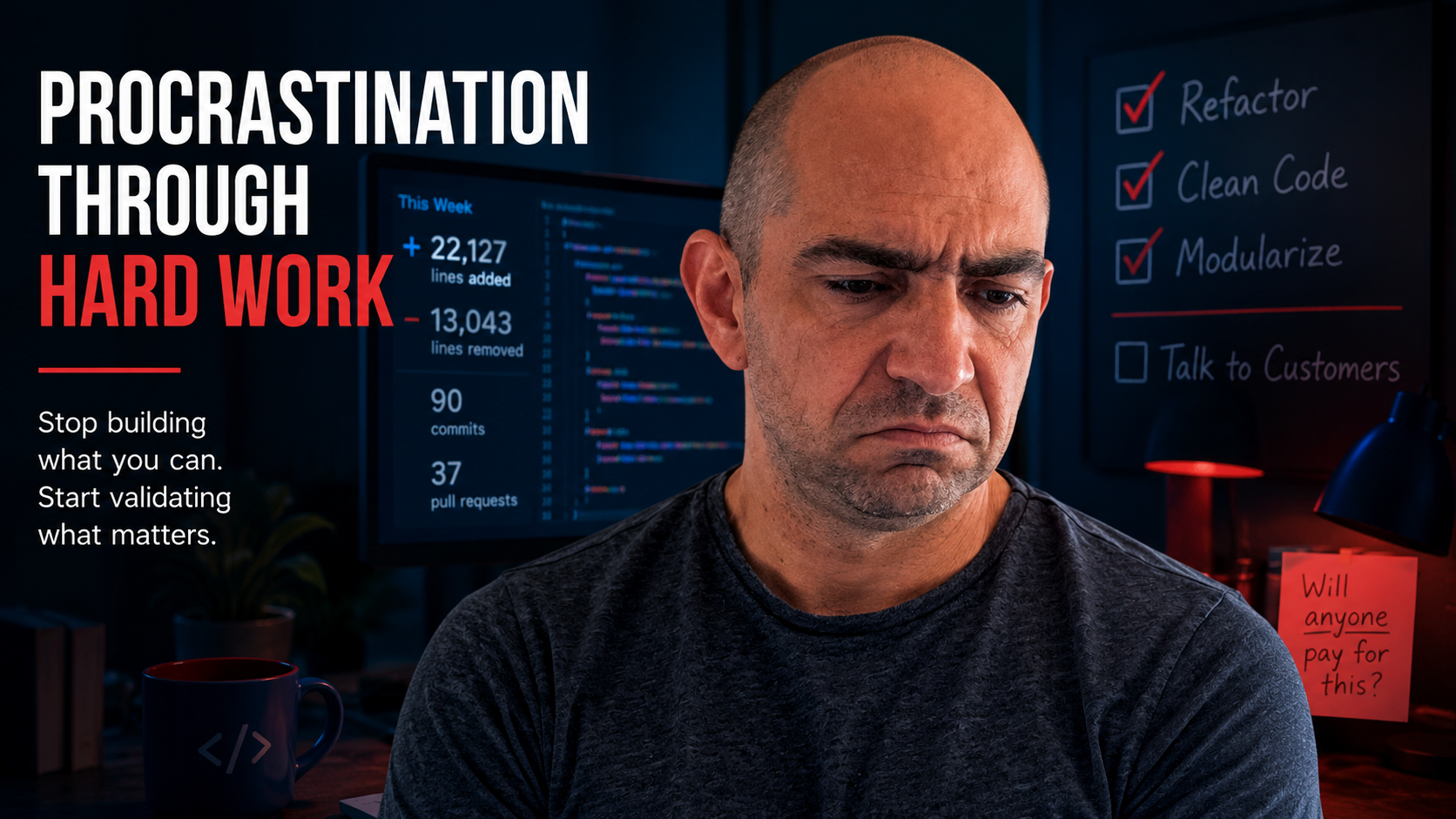
I am a developer. For most of the past month, I used the one thing I am best at to avoid the one thing my company actually needs. There is a way to procrastinate that looks exactly like hard work, and a tidy commit history is its favorite disguise.
Why clean code is not progress before your first customer
My company exists to answer a single question right now: will researchers pay to make their work impossible to overlook? Not whether the code is clean. Not whether the architecture scales. Not whether the landing page is elegant. Will a stranger I have never met find this valuable enough to pay for it. That is the whole game for the first six months. Validation, not scale.
Here is what one of those weeks looked like in the commit log. About 22,000 lines added, 13,000 removed, 90 commits, 37 pull requests. By any engineering measure, a productive week. Then I read the diff more closely. Roughly 70% of it was modularization and deleting dead code. Real work. Genuinely useful. And almost entirely beside the point.
None of it moved the only number that matters in a validation phase. The home page held visitors for about two minutes and converted zero of them. Stranger signups: zero. Paying customers: still zero. The codebase got measurably better while the question the business is supposed to answer stayed exactly where it started.
Why technical founders code instead of talking to customers
Code gives you clean, immediate, impersonal feedback. It compiles or it does not. The tests pass or they fail. Nothing about a failing test feels like a judgment of you. A cold email to a researcher you admire is the opposite. You send it into silence, and silence about work you have poured yourself into reads like a verdict. So you open the editor instead. Refactoring is safe. Asking a stranger for money is not.
Engineering also produces beautiful evidence of effort. Commits, green checkmarks, a tidy diff. You end the day able to point at something. Outreach on a slow week produces a sent folder and no replies. One of those feels like progress. Only one of them is, when the open question is whether anyone wants the thing.
Why writing a bad habit down once does not fix it
The first time I caught this, I wrote it in a weekly review and assumed that would settle it. It did not. I did the same thing the next week, and the week after. Eventually I added a permanent line to every weekly plan: “Engineering-as-avoidance watch.” A standing reminder, because the pull is standing. This is not a one-time mistake you correct and move past. It is a default you have to keep choosing against, every single week.
Why building instead of validating is the most expensive choice
The avoidance can hide the answer. Every week I spend building instead of asking is a week I do not learn whether anyone will pay. If the answer turns out to be no, I would much rather know now, cheaply, than discover it after another month of immaculate refactoring. A perfect codebase for a product nobody wants is the most expensive possible way to not find out.
So I changed the deliverable. For one week I was not allowed to ship a feature. The output was conversations: a free guide that handed researchers something useful with no signup wall, a handful of sharper cold emails, and three real interviews with people who agreed to talk. If those produce signal, the pattern is behind me. If they produce nothing, then the pattern was never just procrastination. It was the diagnosis. Either way, I find out, which was always the only point.
Loud Camel news
Last week Loud Camel, a tool that helps researchers get cited and recognized, shipped no new features on purpose. The slot a feature usually takes went to conversations instead: a no-signup guide, a few sharper cold emails, and three booked interviews. The note for any founder reading this is simple: if “talk to strangers” is not given the same weight on the plan as a feature, the safer work wins every time, and you can lose a month to it before you notice.
Frequently Asked Question
Is shipping the product the same as validating it? No, and the gap is where founders get stuck. Building tests whether you can make the thing; validation tests whether anyone will pay for it, and only the second one tells you if the company should exist. This is also the bet behind Loud Camel: its handbook documents nine visibility tactics drawn from the peer-reviewed literature on how recognition actually accrues, and the product runs those tactics for researchers on a recurring schedule, so the question stops being “did I do the work” and becomes “did the right people notice.”
Takeaway
If you are a founder before your first dollar of revenue, the work that feels most productive is often the work that protects you from the answer. Go get the answer.