Tag: United States
-

Arab world reactions to the agreement between the United States and Iran
This episode's guest is Mor Shapira, a lecturer in the Department of Arabic at Bar-Ilan University and a researcher at the MEMRI (Middle East Media Research Institute). The conversation deals with how the agreement between the United States and Iran is covered and received in the Arab world, and with the new strategies the region's countries are adopting in its wake.
-

How do wars end?
In this episode, the guest is Omer Dank, a security researcher, to discuss the question of how wars come to an end. The conversation reviews the various ways wars have ended in the modern era, and examines the possible scenarios for the end of the current (hypothetical) war between the United States and Israel and Iran.
-
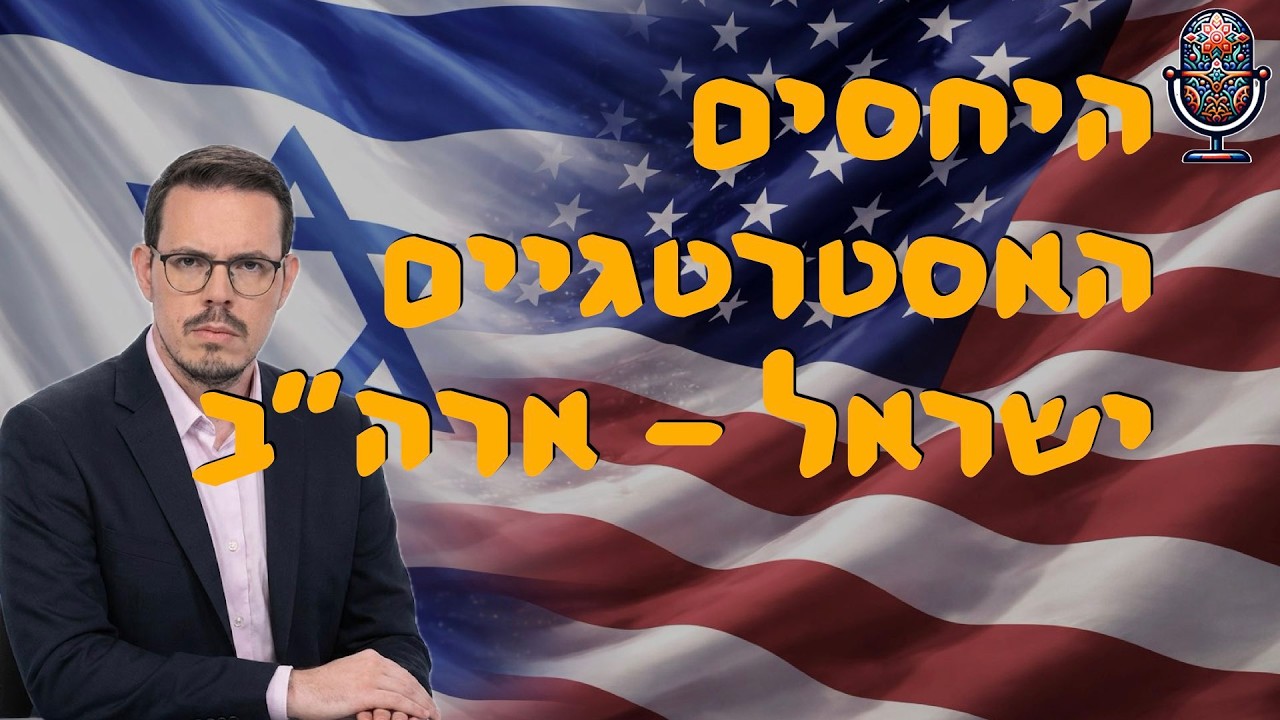
Upgrading the alliance: Israel and the United States in an era of great power competition
In this episode, Nitzan David Fuchs, host of the podcast "The Great Game", joins the discussion on strategic aspects of Israel-US relations. Fuchs argues that Israel should change its perspective on the alliance and focus on how it can contribute to the United States, not just on what it can receive from it. According to him, such a change would allow Israel to upgrade its status, strengthen the alliance, and better deal with its regional challenges.
-

The Kurds in Syria, between autonomy and collapse
In this episode of "This Week in the Middle East," Boris Gorelik hosts Prof. Ofra Bengio, a senior researcher at the Moshe Dayan Center and an expert on Kurdish affairs. The conversation covers the Kurdish people, their identity, their division among four countries, and focuses on the unique and sensitive situation of the autonomous Kurdish entity in northern Syria, which recently faced an existential crisis.
-
Qatar-U.S. relations: An American base and money for Hamas
In this episode, Dr. Ariel Admoni, a researcher specializing in Qatar, joins the show to discuss the complex and intricate relationship between Qatar and the United States. On one hand, Qatar is home to the forward headquarters of the U.S. Central Command (USCENTCOM), the largest American base in the Middle East. On the other hand, Qatar funds activities and organizations, including Hamas and the Taliban, that work against the interests and values of the United States. Dr. Admoni outlines the historical development of the relationship between the two countries and explains how Qatar has made itself an essential strategic asset for Washington.
-

A simulation of a regional peace conference
The episode features Dr. Ironit Levin Schnur, a senior lecturer at the Faculty of Law at Tel Aviv University. The conversation is about a simulation of a regional peace conference, "Riyadh Summit 2025," which was held at Tel Aviv University and tried to simulate a future meeting between leaders from the Middle East. Dr. Levin Schnur, one of the event's organizers, explains the simulation's goals, its methodology, and the insights that emerged from it.
-

Trump's Gaza plan in the Arab media
The episode features Mor from the MEMRI institute for a conversation about the reactions in the Arab world to a proposal attributed to Donald Trump, which suggests evacuating the residents of Gaza, either temporarily or permanently. Mor analyzes how the Arab media views the idea, Trump himself, and the implications for the Palestinian issue.
-

The Arab media reacts to Trump's victory
The episode features Dr. Mor Shapiro, a lecturer in the Department of Arabic at Bar-Ilan University and a researcher at the MEMRI Middle East Media Research Institute. Shapiro analyzes the diverse reactions in the Arab world to Donald Trump's victory in the United States presidential election, and explains why different countries and actors view his return to the White House in different lights.