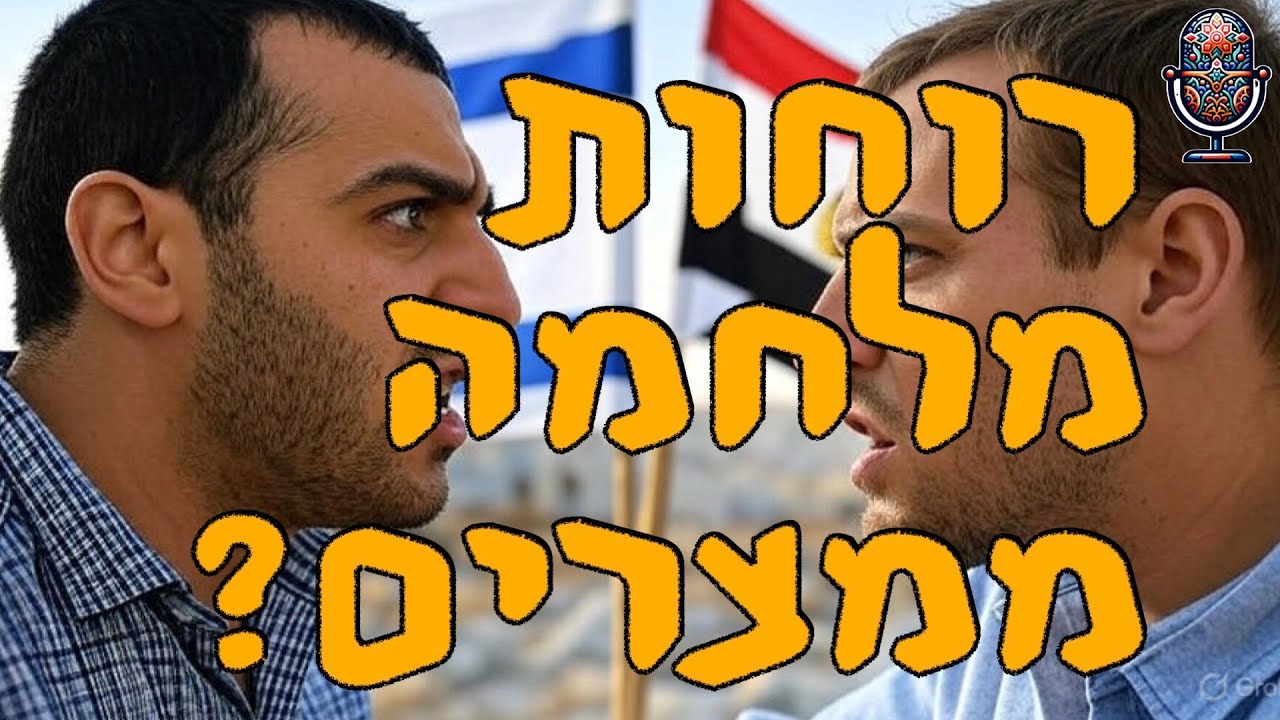
• Egypt and Israel: Is there a danger of war?

    Egypt and Israel: Is there a danger of war?

    October 3, 2025

    AI generated this summary from the Hebrew recording. No human has checked it, and it may contain errors. The recording is the authoritative source.

    The episode’s guest is Middle East scholar, former Knesset member, and research fellow at Chatham House, Dr. Ksenia Svetlova. The conversation deals with reports of an Egyptian military buildup in the Sinai Peninsula, and examines the question of whether Israel is indeed facing a threat of war from its southern neighbor. Svetlova argues that there is no real evidence of Egyptian preparations for war, and that the reports on the subject are part of a political campaign.

    Read the full episode summary

    Media campaign and familiar rhetoric

    According to Ksenia Svetlova, the talk of an Egyptian arms buildup began to gain momentum last February, and it appears to be media spin. She continuously follows the media and public discourse in Egypt and does not detect a genuine warlike spirit. Svetlova explains that the videos of tanks and military trucks, circulated on social media, are mostly old materials being recycled on Egyptian television.

    The threatening rhetoric of President el-Sisi and the display of military power are recurring phenomena every year around national holidays, such as the anniversary of the Yom Kippur War (October 6) and Sinai Liberation Day (April 25). This is part of the Egyptian national ethos, built around the “victory” in the war. According to her, el-Sisi’s speeches, in which he declares that Egypt does not want war but will know how to respond if attacked, are a regular message not aimed only at Israel, but also at Ethiopia and radical Islam.

    The position of the Israeli defense establishment

    Boris notes that sources in Israel, including a reserve officer, are presenting satellite images of new bunkers and trenches in Sinai as evidence of offensive preparations. Svetlova rejects these claims and argues that they are not backed by reliable sources. She emphasizes that contrary to these reports, senior IDF officials have stated in the media that they do not detect Egyptian preparations for war. According to those same officials, the spread of these rumors stems from political motives, and the defense establishment is not a party to it.

    Svetlova adds that no official security body, not the IDF, the Shin Bet, nor the Mossad, has warned of such a danger. She mentions that any entry of Egyptian military forces into Sinai requires Israeli approval, and in recent months, no unusual troop movements have been recorded.

    Egypt’s interests and the regional context

    Svetlova distinguishes between Egypt and Hamas. While Hamas is an ideological organization whose declared goal is the destruction of Israel, Egypt is a nation-state with complex interests. The Egyptian military, which controls about fifty percent of the economy, sees radical Islam and the Muslim Brotherhood as its main domestic enemy.

    In Svetlova’s view, Egypt has no rational interest in attacking Israel. Its economy is in a difficult state and it depends on financial aid from Gulf countries, like Saudi Arabia and the Emirates, which have no interest in a regional escalation. Additionally, Egypt receives 1.4 billion dollars in annual military aid from the United States. Another important economic tie is the import of gas from Israel, which is essential for preventing widespread power outages in Egypt.

    The issue of Palestinian refugees

    Boris asks why Egypt refuses to accept Palestinian refugees from Gaza, even temporarily. Svetlova explains that in Egyptian and Arab discourse, accepting refugees is seen as abetting “tahjir,” the expulsion of Palestinians from their land. Egypt’s official position is that it is preventing the expulsion, based on the belief that if the Palestinians move to Sinai, Israel will never allow them to return. Therefore, Egypt will not agree to be a partner in what it sees as an Israeli plan to eliminate the Palestinian presence in the Strip. The idea that Egypt would give up part of the Sinai to expand the Strip is rejected outright, as sovereignty over every grain of sand in Sinai is a sacred principle in Egypt.

    Changes in attitudes toward Judaism and Israel

    Svetlova notes that despite the anti-Israeli and antisemitic image that has stuck to Egypt over the years, especially during the Mubarak era, a change has occurred in recent years. According to her, incitement in the Egyptian media has decreased significantly, likely as a result of the regime tightening its control over the media outlets.

    In addition, she identifies initial attempts to change textbooks, as well as efforts to renovate ancient synagogues and Jewish cemeteries, like the Bassatine cemetery in Cairo. She sees this as a positive sign, even if it stems mainly from a desire to curry favor with circles in the United States. Further evidence of the complexity of the relationship is the fact that Egypt, despite the war in Gaza, has not closed its embassy in Israel.


    The original episode, in Hebrew: רוחות מלחמה ממצרים?
    October 3, 2025 - 4 minute read -
    podcast Middle East blog This Week in the Middle East
  • Architecture, society, and politics in mosques

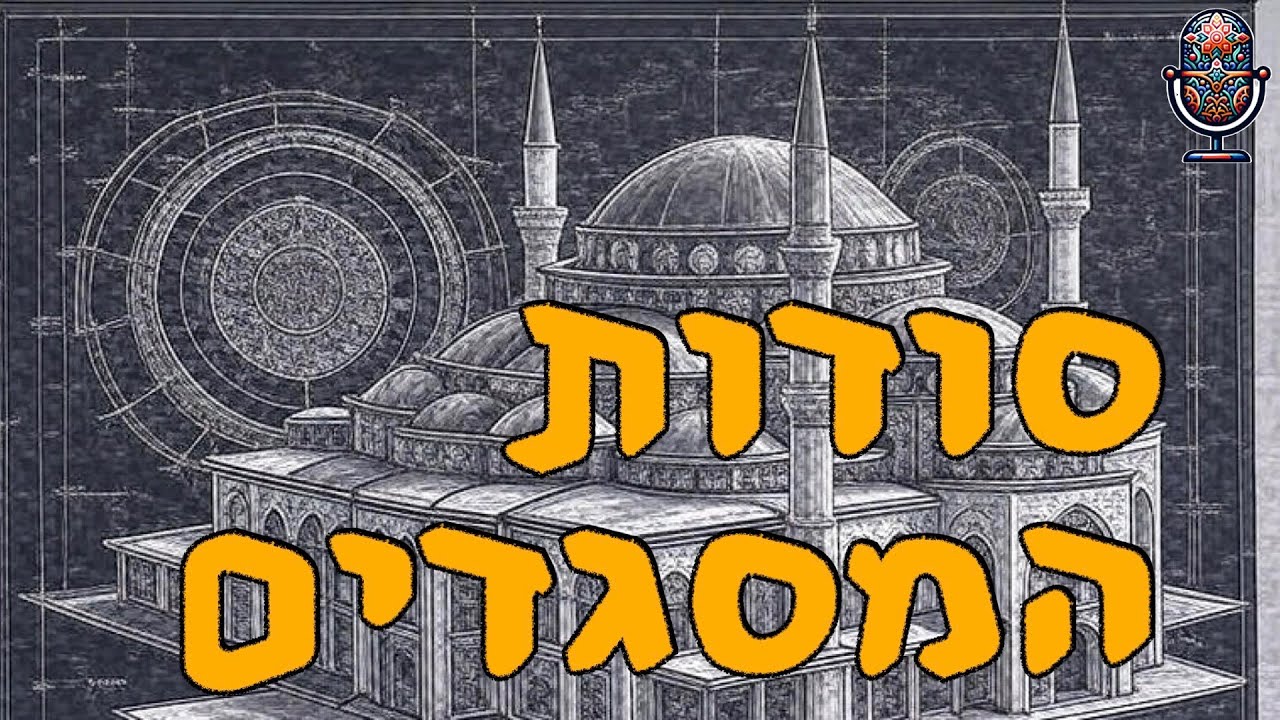
    Architecture, society, and politics in mosques

    September 25, 2025

    AI generated this summary from the Hebrew recording. No human has checked it, and it may contain errors. The recording is the authoritative source.

    This episode’s guest is Dr. Dafna Sharf-Davidovich, a lecturer on the material culture of Islamic lands at the Open University of Israel and the Hebrew University. The conversation is about the architecture of mosques in Israel and around the world. It examines the stylistic, social, and political changes they reflect, from the new mosque in Abu Ghosh to contemporary trends in Muslim construction.

    Read the full episode summary

    The Abu Ghosh mosque and the Ottoman style

    The conversation begins with Boris Gorelik’s observation of the new mosque in Abu Ghosh, which stands out with its four minarets. According to Dr. Sharf-Davidovich, the mosque is indeed unique in the local landscape. It was inaugurated in 2014, and most of its funding came from the government of Chechnya and its president, Ramzan Kadyrov. The residents of Abu Ghosh claim a historical connection to the Caucasus, so they turned to Chechnya for support, where building mosques in a neo-Ottoman style is common.

    She explains that the Ottoman style is characterized by a wide prayer hall covered by a single large central dome, and that its main inspiration is the Byzantine Hagia Sophia church in Istanbul. After the conquest of Constantinople, the church became a symbol that Ottoman architects sought to surpass. The number of minarets in Ottoman mosques served as a status symbol: according to imperial law, only the sultan was allowed to build a mosque with more than one minaret. Therefore, mosques built by local governors, like the Jazzar Pasha Mosque in Acre, have a single minaret. Today, leaders like Turkish President Erdoğan adopt this symbolism, building magnificent, multi-minaret mosques to present themselves as successors to the sultans.

    The social role of the mosque

    Dr. Sharf-Davidovich emphasizes that the mosque has always served as a social center and not just a place of prayer. The original model is the Prophet Muhammad’s house in Medina, which served as a place for assembly, hospitality, and mediation. Even today, many mosques serve as a place for rest, conversation, and community activities similar to a community center, held in side rooms. She argues that the fact that children play soccer in the Temple Mount plaza does not indicate disrespect for the sanctity of the site, but quite the opposite. It expresses the perception of the compound as an open and comfortable community space, a kind of “second home” where believers feel close to God.

    The status of women in the mosque

    In the mid-20th century, with the intensification of social processes worldwide, Muslim women began to demand their place in public prayer. Traditionally, women were not obligated to come to the mosque and prayed at home. In older mosques, areas were allocated for them at the back of the prayer hall or in the courtyard. In contrast, in modern mosques like the one in Abu Ghosh, a dedicated gallery is built for them, similar to the women’s section in synagogues. Dr. Sharf-Davidovich notes that there is also separation on the Temple Mount: on Fridays, women pray in the Dome of the Rock structure and in the northern part of the plaza, while men pray in the al-Aqsa Mosque. The separation is intended to prevent the distraction of the praying men.

    Golden domes and green minarets

    Boris Gorelik brings up the phenomenon of new mosques in Israel being built with golden domes, in contrast to the stone domes of older mosques. Dr. Sharf-Davidovich explains that this is a visual and political statement that began to spread after the end of the First Intifada. The golden domes, coated with modern materials, stand out prominently in the landscape and constitute a declaration. At night, their place is taken by the minarets, which are illuminated with green neon light. She notes that illuminating minarets in green is a phenomenon unique to Israel, as the color green is identified with Islam and is particularly visible in the dark.

    The Dome of the Rock as a national symbol

    The choice of a golden dome is not accidental, and it is a direct reference to the Dome of the Rock. Moreover, many new mosques are built in an octagonal shape, similar to the structure of the Dome of the Rock. According to Dr. Sharf-Davidovich, this carries a strong political statement, because the Dome of the Rock structure is not intended for communal prayer at all but is a memorial built around the Foundation Stone. Adopting the architectural form of this iconic structure turns the new mosques into a symbol of the Palestinian national struggle and of religious and national pride.

    Modernity in mosque architecture

    Islamic architecture is not static and incorporates modern elements. Dr. Sharf-Davidovich gives the Sheikh Zayed Mosque in Abu Dhabi as an example, which combines classical design with modern materials, ecological considerations, and advanced technology. In new mosques, one can find digital boards displaying prayer times, sophisticated amplification systems for the muezzin’s call, and a wide range of enrichment classes for the community, from calligraphy to activities for adults.


    The original episode, in Hebrew: סודות המסגדים

    September 25, 2025 - 4 minute read -
    podcast Middle East blog This Week in the Middle East
  • The murder of Charlie Kirk and the discourse in the Arab world

    The murder of Charlie Kirk and the discourse in the Arab world

    September 18, 2025

    AI generated this summary from the Hebrew recording. No human has checked it, and it may contain errors. The recording is the authoritative source.

    This episode’s guest is Dr. Mor Shapira, a lecturer in the Department of Arabic at Bar-Ilan University and a researcher at the Middle East Media Research Institute (MEMRI). The conversation deals with reactions in the Arab and Muslim world to the September 2024 murder of the American conservative commentator Charlie Kirk.

    Read the full episode summary

    Poetic justice and irony

    According to Mor Shapira, Kirk’s murder created a dissonance in the Arab world. On the one hand, Kirk was a religious and conservative man who supported family values and gun ownership, positions that could have found a receptive audience among traditional communities. On the other hand, he was perceived as anti-Islamic and, above all, was an enthusiastic supporter of Israel, especially after the events of October 7th. He fiercely defended Israel against accusations of genocide in Gaza, and this, according to Shapira, is the main reason for the hostility toward him.

    In non-state-run Arab newspapers, such as Lebanon’s “Al-Akhbar” and the Al Jazeera network, the irony and what was perceived as poetic justice were emphasized. It was argued that Kirk, who supported the Second Amendment to the U.S. Constitution which allows gun ownership, was himself murdered with a gun. Commentators even added that he, who supported the use of American weapons in Gaza, “drank from the same cup” and was murdered with an American weapon by an American assassin, not an external terrorist. Many Muslims in the United States reacted on social media with statements like “he got what he deserved.”

    Conspiracy theories and sowing discord

    Shapira notes that alongside the ethical discussion, conspiracy theories also emerged. Some claimed that the Israeli Mossad or even the Trump administration were behind the murder to gain political profit. She gives the example of two Islamist preachers in Britain, Sheikh Ibn Hazm Idrisi and Ali Dawah, who linked Israel to the murder, similar to the responsibility they attribute to it for the September 11 attacks, the Kennedy assassination, and more.

    The Al Jazeera network, Shapira explains, is exploiting the event to sow discord. The network asks whether the murder, carried out by an American, heralds the beginning of a “fitna,” meaning a civil war, in the United States between the conservative right and the liberal left. This, she says, is a familiar tactic of the network, aimed at sowing division and presenting Western democracies as divided and disintegrating from within.

    Democracy and free speech as weakness

    The Arab coverage of the murder, and of protests and internal conflicts in Israel and the West in general, tends to portray democracy and freedom of speech as a sign of weakness and internal decay, not as a virtue. Shapira explains that while the institutional Arab media gloats over a divided Israel, there are also other, quieter voices that express envy of the ability of citizens in democratic countries to protest against the government. She mentions a hadith, a Muslim tradition, that instructs blind obedience to the ruler, even if he is abusive, as long as “fitna” is avoided, which is the greatest fear in Arab political culture.

    Is it right to ask for mercy for an enemy of Islam?

    Shapira describes a lively discussion that developed on social media among Muslims: whether it is appropriate to ask God for mercy on a person like Kirk, who was perceived as an enemy of Islam. On the one hand, some argued that Islam is a religion of mercy and tolerance, and even if Kirk’s views were outrageous, one should not rejoice in his death and should show compassion, especially toward his children. A similar debate arose after the death of the journalist Shireen Abu Akleh, who was a Christian, and the question was asked whether it is permissible for a Muslim to pray for the repose of her soul.

    On the other hand, other voices rejected any empathy for Kirk. Shapira quotes a preacher from a mosque in Virginia, Ismail Selim, who claimed that the world is better off without Kirk, and that no mercy should be shown to a racist person. According to the preacher, the fact that Kirk was a family man is irrelevant, and his children will probably follow in his footsteps.

    Debate culture in the West and the Muslim world

    At the end of the conversation, Boris asks if a public figure like Charlie Kirk, who knows how to conduct sharp debates, could exist in Israel. In Shapira’s opinion, the culture of public debate is not well-developed in Israel, unlike in the United States and Britain. She notes that the only place where a similar kind of intellectual back-and-forth exists is in the study of a page of Gemara in yeshivas.

    In this context, she talks about the intellectual tradition of “Ilm al-Kalam,” the science of discourse, in medieval Islam. This was an entire theological culture of philosophical arguments and discussions, whose purpose was not to reach an agreement, but to explore issues in depth, to appreciate the multiplicity of opinions, and to enjoy the intellectual exercise itself.


    The original episode, in Hebrew: בין חופש לפחד

    September 18, 2025 - 4 minute read -
    podcast Middle East blog This Week in the Middle East
  • The Israeli strike in Doha and the reactions in the Arab world

    The Israeli strike in Doha and the reactions in the Arab world

    September 10, 2025

    AI generated this summary from the Hebrew recording. No human has checked it, and it may contain errors. The recording is the authoritative source.

    In this episode, Dr. Yaron Friedman joins the show to discuss the Israeli airstrike in Doha, the capital of Qatar, which targeted senior Hamas officials. The conversation, recorded shortly after the strike, deals with the reactions in the Arab world, the diplomatic implications of the operation, and Qatar’s role as a host and financier of the terrorist organization.

    Read the full episode summary

    Reactions in the Arab world

    According to Dr. Yaron Friedman, the entire Arab world condemned the strike, but there is a fundamental difference in the content of the condemnations. Most Arab states, led by the Gulf states, condemned Israel for violating Qatar’s airspace and international law, but refrained from mentioning the harm to Hamas members. The only ones that also explicitly condemned the harm to Hamas were Qatar and Turkey, the organization’s patrons.

    Dr. Friedman notes that on the Qatari channel Al Jazeera, the Israeli operation was described as an act of ingratitude, given Qatar’s mediation efforts in the negotiations for the release of the hostages.

    Conspiracies and Saudi criticism

    Various conspiracy theories have surfaced around the strike. For example, the question arose whether the United States knew about the strike in advance, and whether Qatar’s air defense systems were deliberately not activated. Dr. Friedman adds that other signs, such as the Qatari demand in July that senior Hamas officials surrender their personal weapons, could be interpreted as part of an advance preparation.

    In the Saudi press, by contrast, sharp criticism of Hamas is also heard. The Saudi commentator Mashari Al-Zaydi, who writes for the newspaper Asharq Al-Awsat, described Israel’s policy as a policy of madness (junun) with no red lines, but also pointed an accusing finger at Hamas. He claims that Hamas, in its decision to commit suicide, is dragging the entire region into conflict and giving Israel an excuse to attack throughout the Middle East. According to Saudi commentators, the Arab world should fight Israel in the diplomatic and media arenas, where it is losing, and not in the military arena.

    Qatar as an enemy state

    Dr. Friedman presents his personal opinion that Qatar is not a complex state but a clear enemy state. He bases his claim on the fact that Qatar hosts the Hamas leadership, funnels billions of dollars to the organization, operates a propaganda machine against Israel through its media, and has previously supported jihadist organizations in Syria and perhaps even al-Qaeda. He adds that Qatar also funds anti-Israel academic activity in universities in the United States.

    He mentions an article he wrote a week after the October 7 massacre, in which he wondered why the United States, which maintains a huge military base in Qatar, does not act against the senior Hamas officials located a short drive away from it. He compares the situation to the assassination of Osama bin Laden in Pakistan, which was an ally of the United States, and argues that there is a precedent for military action on the soil of a “friendly” state that hosts terrorists.

    The strike’s impact on the Abraham Accords

    The strike in Doha, Dr. Friedman explains, also damaged relations within the framework of the Abraham Accords. All the signatory countries of the accords condemned Israel, and for the first time, an explicit threat was even heard from the United Arab Emirates to withdraw from the agreements. According to him, Saudi Arabia is the driving force behind the scenes of the Abraham Accords, and it uses the United Arab Emirates and Bahrain as a kind of “test balloon” to examine relations with Israel.

    The logic behind the assassinations

    The conversation also addresses the question of whether assassinations are an act of revenge or a strategic move. Dr. Friedman quotes an article by the commentator Hamid Korman, who argues that assassinations usually have a strategic purpose. Korman provides historical examples: the assassination of Hassan al-Banna, founder of the Muslim Brotherhood, led to the rise of a more extreme figure, Sayyid Qutb. On the other hand, the assassination of senior PLO officials around the time of the Oslo Accords paved the way for a new generation of leaders who were willing to sign the agreement. However, Dr. Friedman believes that in Israel’s case after October 7, there is also a strong motive of revenge.

    Korman even raises a cynical thesis, according to which Israel might leave part of the Hamas leadership alive to preserve the internal Palestinian division and to maintain an excuse to continue attacking Gaza. Dr. Friedman finds logic in this claim.

    The unknown outcome of the strike

    At the time the episode was recorded, the results of the strike in Doha were not yet known. Dr. Friedman emphasizes that if the senior Hamas officials were not eliminated, it would be a serious failure, especially given an American promise to Qatar that such an attack would not be repeated. Such a failure would stand in contrast to successes like assassinations in Iran, and would be more reminiscent of the failed assassination attempt on Khaled Mashal in Jordan in 1997.


    The original episode, in Hebrew: נסיון החיסול בקטר

    September 10, 2025 - 4 minute read -
    podcast Middle East blog This Week in the Middle East
  • Israel-Azerbaijan relations: Oil, arms, and geopolitics

    Israel-Azerbaijan relations: Oil, arms, and geopolitics

    August 14, 2025

    AI generated this summary from the Hebrew recording. No human has checked it, and it may contain errors. The recording is the authoritative source.

    In this episode of “This Week in the Middle East,” Boris Gorelik speaks with Dr. Gallia Lindenstrauss, a senior researcher at the Institute for National Security Studies (INSS), about Israel’s complex relationship with Azerbaijan. The conversation covers the security, economic, and diplomatic aspects of the connection, and examines Azerbaijan’s place in the geopolitical landscape of the Caucasus and the Middle East, against the backdrop of its relations with Iran, Turkey, and the major powers.

    Read the full episode summary

    Azerbaijan and the Abraham Accords

    According to Dr. Lindenstrauss, there is a belief that Azerbaijan will be the next country to join the Abraham Accords. Although Israel and Azerbaijan have had full diplomatic relations since 1993, joining the accords carries several advantages. First, the Abraham Accords have become a successful brand that countries want to be part of. Second, this branding could improve Azerbaijan’s standing in Washington, especially given the uncertainty in its relations with Russia. Third, such a move could pave the way for purchasing American weapons, something that has been largely prevented so far due to the strong Armenian lobby in the United States.

    The triangular relationship with Turkey and Iran

    Dr. Lindenstrauss explains that the relationship between Israel and Azerbaijan began in the 1990s as part of a triangular relationship that also included Turkey, with American encouragement. After the deterioration of relations between Israel and Turkey, the triangle broke down into two separate relationships: Turkey-Azerbaijan and Israel-Azerbaijan. The bond between Turkey and Azerbaijan is particularly close, under the slogan “one nation, two states.”

    A central component of the relationship between Israel and Azerbaijan is the shared threat from Iran. Both countries view Iran as an existential threat. Azerbaijan, a Shiite country with a secular character, fears Iranian subversion on its territory and Iranian ambitions to export the revolution. Iran, for its part, fears a national awakening among the large Azeri minority living in its north.

    Economic and civil cooperation

    The economic relations between the countries are based mainly on deals of arms from Israel in exchange for oil from Azerbaijan. Dr. Lindenstrauss notes that Azerbaijan has been an extremely reliable energy supplier for Israel over the years, although official trade data is classified.

    Beyond that, there is a boom in tourism, and Azerbaijan’s national airline has continued to fly to Israel even in times of war. Additionally, civil cooperation is developing in areas such as water desalination and the technological rehabilitation of the territories that Azerbaijan regained from Armenia in the Nagorno-Karabakh region.

    The Washington summit and the conflict with Armenia

    Dr. Lindenstrauss estimates that the upcoming visit of Azerbaijan’s president, Ilham Aliyev, to Washington will include a meeting with the leader of Armenia with American mediation, and perhaps even under the auspices of Donald Trump. She anticipates the signing of a memorandum of understanding on the path to a peace agreement, a move that would be a prerequisite for Azerbaijan joining the Abraham Accords. Such an agreement would allow the opening of borders between Azerbaijan, Armenia, and Turkey, and would open new trade routes. One of the remaining points of contention is control over the “Zangezur corridor,” which would connect Azerbaijan to the Nakhchivan exclave through Armenian territory.

    Azerbaijan as a regional mediator

    Baku, the capital of Azerbaijan, serves as a fertile ground for secret diplomacy. According to Dr. Lindenstrauss, talks are held in Baku between Israel and Turkey on deconfliction mechanisms, as well as talks between Israel and the new regime in Syria. This role as a mediator adds to Azerbaijan’s diplomatic prestige.

    What can be learned from Azerbaijan

    Boris asks what lessons Israel can learn from Azerbaijan’s conduct. Dr. Lindenstrauss notes the emphasis President Aliyev places on “hard power”: advanced weapons systems, including Israeli UAVs, were a decisive factor in Azerbaijan’s victory over Armenia. In addition, she points to Aliyev’s deep personal involvement in diplomacy and the promotion of an image of religious tolerance, while suppressing radical Islamic elements, similar to the Gulf states.

    Tensions with Russia

    Significant tension recently arose between Russia and Azerbaijan after a Russian air defense system shot down an Azeri aircraft. Dr. Lindenstrauss explains that Russia is losing its influence in the Caucasus, as even Armenia, its traditional ally, is distancing itself from it. This weakening of Russia opens the door for American and European influence in the region, partly to diversify Europe’s energy sources and to compete with Chinese influence. She adds that in response to criticism over selling weapons to Azerbaijan, Israel highlights Armenia’s close relations with Iran.


    The original episode, in Hebrew: יחסי ישראל אזרבייג׳ן

    August 14, 2025 - 4 minute read -
    podcast Middle East blog This Week in the Middle East
  • Alcohol in the Islamic world

    Alcohol in the Islamic world

    August 9, 2025

    AI generated this summary from the Hebrew recording. No human has checked it, and it may contain errors. The recording is the authoritative source.

    This episode’s guest is Leon Schwartz, the owner of the Biratenu pub and other bars in Jerusalem, an alcohol expert, and a graduate of Islamic and Middle Eastern studies. Schwartz paints a complex picture of Islam’s relationship with alcohol, from the pre-Islamic period, through the development of the prohibition in the Quran and Hadith, to the diverse reality of alcohol consumption and production in Muslim countries today.

    Read the full episode summary

    Alcohol in the pre-Islamic period

    According to Leon Schwartz, contrary to popular belief, alcohol culture was common in the Arabian Peninsula during the pre-Islamic period, known as the Jahiliyyah. He points to the Nabataeans, trading tribes who also operated in the Negev region, as people who engaged in viticulture and wine production. Archaeological findings in the Negev reveal the remains of wineries, and some wineries today are trying to reconstruct Nabataean agriculture and wines.

    Schwartz explains that the wine of that era was different from modern wine. Fermentation processes were unstable, so they used to flavor the wine with various plants and spices to improve its taste. The main sources of sugar for fermentation were grapes and dates, which were common in the region. Key evidence for this drinking culture is found in Jahili poetry. The poets, who were a kind of “Wikipedia and Netflix of the period,” documented social life, and their poetry includes many poems praising wine and drinking gatherings. He gives the example of the poetry of Imru’ al-Qais, a sixth-century poet, which describes nights of drinking wine in the company of friends.

    The prohibition in the Quran: a gradual process

    The prohibition on drinking alcohol in Islam was not established in a single, absolute verse. Instead, it developed gradually in three stages, as they appear in the Quran.

    1. The first stage (Surah Al-Baqarah): The verse states that in wine and gambling there is “great sin and also some benefit for people,” but the sin is greater than the benefit. This is a warning, not an absolute ban.
    2. The second stage (Surah An-Nisa): The verse forbids believers from approaching prayer while intoxicated, “until you know what you are saying.” According to Schwartz, this verse was revealed after an incident in which an intoxicated prayer leader made a mistake in its wording.
    3. The third stage (Surah Al-Ma’idah): Here, the severe and final prohibition appears. The verse defines wine and games of chance as an “abomination of Satan’s handiwork” and calls on believers to avoid them.

    Muslim commentators explain this gradualness by saying that the Prophet Muhammad could not have suddenly forbidden an entire society, where drinking was deeply rooted, from ceasing its custom. Therefore, the ban was imposed step by step. Schwartz adds that the interpretive principle of “naskh,” whereby a later verse abrogates an earlier one, explains how the final prohibition is the binding one. However, he notes that there are other verses in the Quran, such as in Surah Muhammad, that promise believers “rivers of wine, a joy to those who drink” in paradise.

    The tightening of the ban in the Hadith

    Islamic law, which is based on the Hadith (traditions about the Prophet Muhammad), makes the prohibition even stricter. Schwartz provides examples from authenticated hadiths. One hadith curses not only the drinker but everyone involved in the supply chain: the one who pours, the one who produces, the one who sells, the one who buys, the one who transports, and the one who profits from it. Another hadith calls wine “the mother of all evil,” and another hadith states that the prayer of a person who has drunk wine will not be accepted for forty days.

    The situation today: between prohibition and legality

    Schwartz refutes the assumption that alcohol is forbidden throughout the Muslim world. He divides Muslim countries, defined as countries with a Muslim majority of 50% or more, into three groups:

    1. Total prohibition: Alcohol is completely forbidden in only five countries: Saudi Arabia, Kuwait, Libya, Afghanistan, and Somalia. However, he notes that in Saudi Arabia, the law is expected to change to allow sales to diplomats.
    2. Prohibition for Muslims only: In countries like Pakistan, Bangladesh, Iran, Sudan, and Malaysia, alcohol is forbidden for Muslims but permitted for foreigners and non-Muslims. About 670 million Muslims live in these countries.
    3. Legal for all: In many countries, including Turkey, Lebanon, Morocco, Jordan, Egypt, and Albania, alcohol is legal for the entire population. About 730 million Muslims live in these countries.

    In addition, he notes that certain streams of Islam, like the Alawites in Syria and the Alevis in Turkey, consume alcohol. Per capita consumption data shows that in some Muslim countries, such as Burkina Faso, Chad, and Albania, alcohol consumption is higher than in Israel.

    Alcohol production in Muslim countries

    Besides consumption, there is also a thriving alcohol production industry in the Muslim world. Schwartz talks about breweries, including craft breweries, operating in the Palestinian territories (Taybeh, Shepherds), Jordan, Lebanon, and Turkey (producer of Efes Pilsen). Pakistan has a whiskey industry, a legacy of British rule, and North African countries, especially Algeria, have a developed wine industry with French influence. Algeria was even once one of the world’s largest wine exporters. In Israel, one can find Palestinian products, and sometimes also Lebanese and Jordanian arak.


    The original episode, in Hebrew: אלכוהול בעולם האסלאם

    August 9, 2025 - 4 minute read -
    podcast Middle East blog This Week in the Middle East
  • One short prompt message that made my vibe coding life easier

    One short prompt message that made my vibe coding life easier

    August 3, 2025

    One short prompt message that made my vibe coding life easier

    Before every git commit, I paste this into Cursor / Claude / GitHub Copilot—whichever is working that day:

    “examine the changes since the last commit – can you simplify anything?”

    One short prompt message that made my vibe coding life easier

    That’s it.

    One line. No magic. Just a tiny push to refactor, delete, and clarify.

    Since adopting it, I commit less junk.

    I rewrite more than I add.

    And future-me swears a little less.

    #VibeCoding #DevTips #Git #AIpairProgramming #CleanCode

    August 3, 2025 - 1 minute read -
    blog
  • The BDS movement and economic warfare against Israel

    The BDS movement and economic warfare against Israel

    July 30, 2025

    AI generated this summary from the Hebrew recording. No human has checked it, and it may contain errors. The recording is the authoritative source.

    This episode’s guest is Eyal Hishkes, an economic consultant, social activist, and author of the book “Bridges of Economy.” Hishkes talks with Boris about the main ideas in his book, focusing on the BDS movement. He reviews the movement’s historical roots, analyzes the extent of the damage it causes Israel, and proposes strategic ways to counter the economic warfare.

    Read the full episode summary

    Economic ties as a value in themselves

    At the beginning of the conversation, Eyal Hishkes presents the central thesis of his book, “Bridges of Economy.” According to him, economic ties have value in themselves, even in the absence of full diplomatic relations or normalization. He points to Israel’s relations with Egypt and Jordan as an example. Although diplomatic relations are not warm, economic ties, especially in the gas sector, are in good shape. Hishkes argues that economic incentives can positively influence policy, but this depends on the nature of the leadership. In countries with rational leadership, like the United Arab Emirates, the economy carries great weight. In contrast, when dealing with ideological terrorist organizations like Hamas, the economic incentive may prove to be a mistake and even harmful.

    Hishkes adds that economic ties also exist without formal agreements. An example of this is a trade route where goods from Saudi Arabia, Iraq, and other Gulf states arrive by truck at the Jordan River crossing, enter Israel, and are exported to the world through the port of Haifa. He calls this a micro-level economic connection, and also includes in this category initiatives like the sale of surplus apples from Druze in the Golan Heights to Druze in Syria via the Red Cross, a connection that existed until the Syrian civil war.

    From the Arab boycott to BDS

    According to Hishkes, the BDS movement has deep historical roots in the Arab boycott, which began even before the establishment of the state. The Arab boycott included a primary boycott, meaning a ban on direct trade with Israel, and a secondary boycott, which was directed at non-Arab companies and countries that traded with Israel. Companies like Coca-Cola and many Japanese car manufacturers, with the exception of Subaru, avoided marketing in Israel for fear of the boycott. The Arab boycott weakened significantly starting in the 1970s, and especially in the 1990s with the peace agreements. Its decline created a sort of vacuum in the economic warfare against Israel, and its place was taken by the modern BDS movement.

    The movement’s more immediate roots, Hishkes explains, lie in the 2001 Durban Conference, where Israel’s economic strength was identified as a strategic vulnerability. The movement was officially founded in 2005, and it operates in a decentralized manner with the goal of harming Israel’s economy, as well as its academic, cultural, and sports ties.

    The damage of BDS: economic or reputational?

    Hishkes details the meaning of the acronym BDS, which stands for Boycott, Divestment, and Sanctions. However, he notes that in practice, Israel’s economy, and particularly its high-tech sector, has only grown stronger since the movement’s inception. According to him, there is no comprehensive research on the movement’s damage, but it appears that it has not succeeded in preventing the growth of the Israeli economy.

    Nevertheless, the movement has had specific successes, such as the cancellation of artists’ performances or the divestment of certain companies. Hishkes, referring to a book by the economist Yossi Zeira, argues that the main damage of BDS is not economic but a “mental burden.” The activity against Israel harms the subjective feeling of Israelis and the country’s image in the world. Similar to terrorism, whose primary goal is to sow fear rather than inflict strategic damage, BDS mainly harms morale and the sense of well-being.

    How to deal with the boycott?

    Hishkes suggests several ways to respond. First, he believes the state of Israel acted wisely by not making the fight against BDS a top priority, in order not to give the movement the attention it desires. Second, it is possible to use anti-boycott legislation that exists in the United States and other countries, legislation that was originally created to combat the Arab boycott.

    Another strategy is to turn the BDS boycott lists into a “double-edged sword” by encouraging Israel’s supporters around the world to specifically buy the products that appear on these lists. Above all, Hishkes emphasizes the importance of building many layers of support for Israel in the world, not only at the governmental level but also in the business sector, academia, and grassroots organizations. Boris adds that another way to respond is simply to be so good that Israeli products cannot be ignored. Hishkes agrees and adds that it is harder to impose sanctions on unique products that have no substitute, like Israeli cyber and security technologies.

    The Turkish boycott and the need for a geo-economic strategy

    The Swords of Iron war gave a tailwind to the BDS movement, and this was reflected in actions by countries like Turkey and Ireland. Hishkes focuses on the Turkish case, where for years a paradox existed of political hostility alongside trade worth billions of dollars. The trade continued even in the first months of the war, but eventually, following internal political pressure, President Erdogan announced a complete boycott in May 2024.

    According to Hishkes, the economic damage to both sides is limited. Turkey’s economy is large enough to find alternative markets, and most of the products Israel imported from Turkey, like cement and iron, are generic products for which substitutes can easily be found. A study by the Bank of Israel indeed showed that the impact on trade and prices in Israel was minor.

    In conclusion, Hishkes argues that Israel must formulate a coherent geo-economic strategy, something it has not done to date. Such a strategy should map out economic risks and opportunities, and use economic tools proactively, both to improve relations and to wage economic warfare against terrorist organizations.


    The original episode, in Hebrew: האם BDS עובד?

    July 30, 2025 - 5 minute read -
    podcast Middle East blog This Week in the Middle East
  • Love stories from the medieval Middle East

    Love stories from the medieval Middle East

    July 24, 2025

    AI generated this summary from the Hebrew recording. No human has checked it, and it may contain errors. The recording is the authoritative source.

    This episode’s guest is Idit Sharoni, curator at the Museum for Islamic Art in Jerusalem. She talks about the museum’s new exhibition, “Love Stories”, which explores and presents tempestuous love stories from the medieval Middle East. The exhibition focuses on illustrated manuscripts and touches on themes like forbidden love, madness, and death.

    Read the full episode summary

    The curator’s role

    Idit Sharoni begins by explaining the work of a curator. According to her, the curator is responsible for the museum’s treasures. Most of the museum’s collection, about 80 to 90 percent of the items, is kept in a vault under optimal conditions to ensure its preservation for generations. The temporary exhibitions are an opportunity to show the public treasures that are not on permanent display, and to build a narrative around them that the curator wishes to convey.

    The “Love Stories” exhibition

    The idea for the exhibition, Sharoni says, came from studying the magnificent manuscripts in the museum’s collection. These manuscripts, the earliest of which in the exhibition dates to 1506, include poetic writing, calligraphy, and tiny paintings called miniatures. The collection of the Museum for Islamic Art is considered one of the finest in the world, and it was assembled in the 1960s by Professor Richard Ettinghausen for the museum’s founder, Vera Bryce Salomons. The most magnificent manuscripts were created in royal court workshops, mainly during the Safavid period, where teams of professionals worked: calligraphers, illustrators, gilders, and bookbinders.

    Depictions of figures in Islamic art

    Boris asks how the tradition of painting human figures in manuscripts aligns with the prohibition on creating figurative images in Islam. Sharoni clarifies that there was a clear separation: in religious contexts, the prohibition was strictly observed. In contrast, in secular literature, like the love stories presented in the exhibition, artists had the freedom to paint human figures and courtly scenes. These manuscripts also often served as diplomatic gifts, hence the great splendor invested in them.

    The mystical dimension of love

    The exhibition presents four great love stories from the lands of Islam. These stories, which originally traveled orally through storytellers, received mystical and spiritual interpretations when they reached the Persian poets. According to Sharoni, some of the poets, like Nizami, were not Sufis themselves but incorporated deep esoteric layers into their works. Later poets, like Jami, already gave the stories a distinctly Sufi interpretation.

    Yusuf and Zulaikha: Earthly and spiritual love

    One of the central stories is “Yusuf and Zulaikha” by Jami, based on the story of Joseph and Potiphar’s wife. In Jami’s Sufi version, the story describes Zulaikha’s earthly and desperate love for Yusuf, but at the same time symbolizes the believer’s journey of suffering on the path to union with God. Ultimately, after Zulaikha grows old and renounces her idols, Yusuf sees her inner beauty and they are united. The exhibition displays a miniature depicting their union, alongside a video work by the artist Nurit Yitzhak that gives it a contemporary interpretation.

    Love, madness, and death

    The connection between love, madness, and death is a central theme in the story of “Layla and Majnun”. Qays falls in love with Layla, but they are forbidden to marry. Overcome with grief, he loses his sanity, hence his nickname Majnun, meaning madman. He flees to the desert and lives a life of asceticism. In the Sufi interpretation, Majnun’s journey is an allegory for the mystic’s journey, who sheds the pleasures of the material world to achieve spiritual union with the object of his love. At the end of the story, Layla dies of grief, and Majnun dies on her grave. A miniature in the exhibition depicts their embrace after death, symbolizing the perfect divine union.

    European influences and making the stories accessible

    Sharoni notes that by the 16th century, European influence on the art is already apparent. The exhibition features miniatures by artists like Reza Abbasi, who worked independently for a European audience. Their style is freer and more naturalistic, and they focus on depicting the feeling of love and not just the story’s narrative.

    To make the stories accessible, which were originally written as long, rhyming Persian poetry, the exhibition incorporates short videos. In each video, the actor Gadi Weissbart plays a traditional storyteller and recounts the essence of one of the stories in Hebrew. This way, the audience can understand the narrative before they approach the miniatures. Alongside the manuscripts, objects from the period are also displayed, such as wine goblets and perfume bottles, which enhance the sensory experience. According to Sharoni, the exhibition seeks to offer the audience a moment of respite and escape, and to show the comforting power of love and story.


    The original episode, in Hebrew: אהבה, שגעון, מוות

    July 24, 2025 - 4 minute read -
    podcast Middle East blog This Week in the Middle East
  • How Sausages Are Made (and How a Vibe Research Was Born)

    How Sausages Are Made (and How a Vibe Research Was Born)

    July 24, 2025

    How Sausages Are Made (and How a Vibe Research Was Born)

    It started with an idea.

    Months ago, long before there was a paper or even a draft, I found myself circling around a question: why do some reasoning models seem to “fail” in ways that feel strangely human? I kept turning it over in my head on walks, in the car, in those in-between moments when you’re not really working but your mind refuses to let go.

    Then one night I stumbled upon the Apple paper, The Illusion of Thinking, and one week later came The Illusion of the Illusion of Thinking. It was like someone had dropped a match into a pile of dry twigs. It didn’t give me the idea, it sparked the one I’d been nursing quietly for months. Suddenly, I couldn’t stop thinking.

    I opened a new project, started pulling papers, sketching diagrams, whispering to myself while driving. I even used ChatGPT in voice mode during commutes, pouring my thoughts out loud so I would not lose them. I spinned up every deep search product I had access to, I wrote, rewrote, used Claude and ChatGPT to expand, clarify, and critique the ideas. It was like vibe coding, but in academic writing. For me, this collaboration with an AI was new, so I started a diary.

    For me, this collaboration with an AI was new, so I started a diary and invited friends to read in in real time.

    My diary shows 17 hours logged, spread over a few weeks. But those 17 hours? They are not the full picture. They are just the visible part of a much longer story, the part where I sat in front of a keyboard. The invisible part was the months of thinking, discarding, distilling, connecting dots that only started to make sense later.

    Then came the reviewing process.

    If you’ve ever sent a paper out for peer review, you know that’s when the sausage grinder really starts. Reviewer 1 was constructive, nudging me to explain how my work went beyond prior critiques. Reviewer 2, let’s just say their feedback was less than kind. They questioned the contribution, the clarity, even the usefulness of the whole thing. Two striking remarks stayed with me: Reviewer 2 wrote

    “There is no contribution of the paper, the discussion is low-level quality and the conclusions do not seem to have practical or theoretical usefulness.” Another line hit just as hard: “The paper proposes a discussion on an extensive subject, but fails only analyzing shortly specific topics of that subject.”

    For an hour or two, I was angry. Then I got to work. I rewrote the introduction, reframed the entire contribution, tightened every paragraph. I added design implications I hadn’t planned to include. I went back through decades of references to make sure every citation pulled its weight. Working on the original draft and the submission took 17 hours (MDPI.com’s author process is smooth as silk). Answering the reviewers took 14 more hours.

    And then, something surprising happened. I realized that Reviewer 2’s harshness had actually made the paper stronger. Their criticism forced me to look hard at the messy, half-ground meat of my argument and turn it into something people could actually digest. Reviewer 2, by the way, was only slightly impressed and still recommended not to publish the paper, even after the improvements.

    Now there’s a screenshot sitting on my desktop, full of tracked changes. It’s the clearest picture of what vibe research really is: an idea sparked, shaped by months of invisible labor, tested in the fire of critique, and finally molded into something you can hold in your hands.

    How Sausages Are Made (and How a Vibe Research Was Born)

    So yes, my diary says 17 hours. But the real work started months before that, and it never really stops.

    That’s how sausages are made.

    What’s your own behind-the-scenes story? 👇 I’d love to hear it.

    July 24, 2025 - 3 minute read -
    blog
  • Celebration time

    Celebration time

    July 24, 2025

    Celebration time

    🎉 Not only has was my paper accepted to publication in Applied Sciences, its preprint has already been downloaded 100 times on preprints dot org! 🚀

    Celebration time

    BTW: if you are into #AI and think how it affects the humanity, you should totally read it. If you host podcasts on AI, you should totally invite me to talk . I LOVE talking about myself :-)

    #Research #Science #Publication

    July 24, 2025 - 1 minute read -
    blog
  • A Bird in the Hand… and Two? Even Better!

    A Bird in the Hand… and Two? Even Better!

    July 22, 2025

    A Bird in the Hand… and Two? Even Better!

    Tonight I received two separate emails from two different journals – both saying the same thing:

    Two of my papers have been accepted for publication.

    One of them started its journey back in 2016 and finally crossed the finish line.

    The other was written from scratch and accepted within a month.

    No clear moral here, except: keep going, and keep trying.

    (Also… check the timestamp on those emails 🙂)

    A Bird in the Hand… and Two? Even Better!

    Feel free to reach out if you’d like to hear more about the journey or the lessons learned!

    July 22, 2025 - 1 minute read -
    blog
  • Why the Iranians are not rebelling, and what it means for Syria

    Why the Iranians are not rebelling, and what it means for Syria

    July 16, 2025

    AI generated this summary from the Hebrew recording. No human has checked it, and it may contain errors. The recording is the authoritative source.

    This episode’s guest is Alex Grinberg, a Middle East scholar and researcher at the Jerusalem Institute for Strategy and Security. The conversation deals with the stability of the regime in Iran despite popular unrest, and moves on to analyze the collapse of the Assad regime in Syria as a basis for discussing power dynamics, alliances, and the required Israeli strategy in the new Middle East.

    Read the full episode summary

    Why is the Iranian regime stable?

    Boris Gorelik opens by asking why the Iranian people, who seemingly hate the ayatollahs’ regime, do not rebel against it despite the severe blows the regime has suffered. According to Alex Grinberg, the answer lies in the inability of many Israelis to understand the nuances and subtleties of Iranian society. He explains that the fact that the people do not support the regime is what has enabled Israel’s intelligence operations inside Iran, as it is relatively easy to recruit collaborators. However, hatred for the regime does not necessarily translate into a willingness to rebel.

    Grinberg argues that the Israeli expectation of a popular uprising stems from an Israel-centric perception that does not match reality. He compares the situation to Russia, where citizens do not rebel against Putin, not out of love for him, but out of fear that the alternatives are worse. According to him, the idea of a “people” rising up is a myth. Revolutions are led by a small, self-sacrificing core, not by the masses.

    He quotes an anonymous Iranian blogger who explains that the urban, liberal youth in Tehran, although they oppose the regime, are unable or unwilling to initiate a violent rebellion. These people have a reasonable standard of living and are not willing to risk their lives and property, especially when there is no clear governing alternative. A rebellion will only break out when there is a crack in the elites, or when the public has nothing to lose, and that is not the current situation in Iran.

    The collapse of the Assad regime in Syria

    The conversation moves to Syria as a test case, where a regime fell after an armed uprising. Grinberg clarifies, arguing that Assad did not massacre “his own people.” According to him, his people are the Alawites, and he was fighting Islamists who threatened to destroy all minorities. Therefore, the Sunni elites in Damascus supported him, not out of love, but from an understanding that he was the lesser of two evils compared to the jihadists.

    The collapse of the Assad regime, Grinberg explains, was made possible for several reasons. First, Hezbollah, which was the main fighting force supporting Assad, was weakened by the blows it took from Israel and could not send reinforcements to Syria. Second, Russia was busy with the war in Ukraine and could not provide significant assistance. The decisive factor, he says, was the composition of the Syrian army. Most of the rank-and-file soldiers are Sunnis, and without Hezbollah’s support, they had no motivation to fight against their Sunni brothers. They simply abandoned their weapons and fled.

    Al-Jolani and the post-Syrian chaos

    Today, Grinberg argues, there is no Syrian state. In its place, there is chaos. At the center of the chaos is Abu Mohammad al-Jolani, the leader of the rebels, who was formerly a senior commander in an al-Qaeda branch. Even if his current intentions are good and he is trying to establish a unified Syrian army, he cannot shake off his jihadist past. Moreover, if he gets too close to the West, he will risk his life and be considered a traitor and an agent of the Jews.

    The immediate danger is the situation in the Druze Mountain region (Suwayda). According to Grinberg, jihadist forces, which now include units of al-Jolani equipped with tanks, are trying to invade the area. Whether Jolani is ordering this or has no control over his forces, the result is dangerous. This proves that even if Jolani declares moderation, the reality on the ground is violent and dangerous, especially for minorities.

    The need for an Israeli strategy: ‘Pax Israeliana’

    Boris asks why Israeli action in Syria is necessary. Grinberg replies in the spirit of Machiavelli: Israel cannot remain neutral when surrounded by violent forces. He recounts a conversation with a diplomat from a friendly Muslim country, who argued that the region expects Israel to present a clear geopolitical vision. The Israeli approach of “just leave us alone” is perceived as childish and not serious in a region where empires like Iran and Turkey operate with a long-term vision.

    The Israeli vision, in Grinberg’s view, should be a “Pax Israeliana” (Israeli peace), similar to the “Pax Romana.” This does not mean conquest, but rather ensuring regional order and security. Israel must make it clear that anyone who threatens it or its allies will suffer a severe blow. This is what the local populations, including the Druze and the Sunnis, want: stability and security.

    Specifically, if jihadists threaten the Druze in Suwayda, Israel must respond forcefully, for example by bombing targets like the city of Daraa, to create deterrence. If Syria becomes a “no man’s land,” Iran could penetrate it, and Israel would have no way to stop it. Therefore, it is necessary to demonstrate strength now to prevent greater violence in the future.

    The limits of power and the alliance with the Druze

    Grinberg emphasizes that morality in foreign policy is about credibility and loyalty. Israel must protect its allies, like the Druze, but it must also clearly define the limits of its power. Israel can protect Suwayda, but it cannot protect Druze in Damascus or Aleppo. It must not make promises it cannot keep.

    At the same time, Israel must not repeat past mistakes, as in the First Lebanon War, and rely exclusively on the information its allies provide. Israel must develop its own independent and deep understanding of what is happening in the region. Loyalty to the Druze does not mean that Israel should do whatever they want. Their interests are important, but Israel also has its own interests. Ultimately, he concludes, in the Middle East there is no clear distinction between peace and war, and power dictates the rules of the game.


    The original episode, in Hebrew: בין איראן לדרוזים

    July 16, 2025 - 5 minute read -
    podcast Middle East blog This Week in the Middle East
  • A chain of betrayals in the Axis of Resistance

    A chain of betrayals in the Axis of Resistance

    July 10, 2025

    AI generated this summary from the Hebrew recording. No human has checked it, and it may contain errors. The recording is the authoritative source.

    This episode features Dr. Yaron Friedman. According to Friedman, the collapse of the Iranian Axis of Resistance in recent months can be explained by a chain of betrayals and broken agreements. He reviews these betrayals, which began during the Syrian civil war and culminated in the current war.

    Read the full episode summary

    Hamas’s betrayal of Assad

    Friedman begins with the first betrayal in the chain, which he says occurred during the Syrian civil war. After the Hamas leadership moved to Damascus in 1999 and received generous hospitality from Bashar al-Assad’s regime, it decided to stab him in the back. In 2012, against the backdrop of the rise of the Muslim Brotherhood in Egypt and Tunisia and a sense that Assad was about to fall, Hamas chose to support the Syrian opposition. Friedman explains that Assad never forgave Hamas for this. Even when Hezbollah tried to arrange a reconciliation years later, Assad agreed to meet with Hamas representatives but adamantly refused to meet Khaled Mashal, who headed the organization’s political bureau at the time of the betrayal.

    Hamas’s sense of betrayal after October 7

    According to Friedman, Hamas was never a natural member of the Shiite Axis of Resistance, as it is a Sunni organization. Nevertheless, its leadership took Iranian propaganda and Nasrallah’s declarations about the destruction of Israel seriously. Hamas expected that when it launched its attack on October 7, all members of the axis would join it in an all-out war. The expectation was that Palestinians in Judea and Samaria and Israeli Arabs would also join the struggle, similar to the events of “Guardian of the Walls” (called “Sword of Jerusalem” in Arabic).

    However, none of this happened. Hamas found itself alone in the war. Hezbollah did join the next day, but it limited itself to a low-intensity war of attrition and did not open a full front. The Palestinian Authority condemned the attack and called it a crazy adventure. The Arab world, including Egypt and Jordan, stood aside. Egypt even blocked the Rafah crossing, and Jordan prevented marches from reaching the border with Israel. From Hamas’s point of view, everyone betrayed it.

    The betrayal of Hezbollah

    Hezbollah, too, experienced betrayal, Friedman argues. After months of low-intensity fighting, Israel launched a large-scale offensive in September 2024 that destroyed the organization’s infrastructure in southern Lebanon. Hezbollah expected its patron, Iran, to intervene on its behalf, or at least that the pro-Iranian militias in Iraq and the Houthis in Yemen would come to its aid as they had promised. This did not happen.

    Friedman also adds the Assad regime to the list of betrayers, in whose territory not a single demonstration for Gaza was held. The only demonstrations in Syria took place in rebel-held areas, such as Idlib. This may have been Assad’s revenge on Hamas, he says.

    In addition, Hezbollah felt betrayed by the broader Shiite world. The organization hoped that the supreme religious authority in the Shiite world, Ayatollah Ali al-Sistani of Iraq, would issue a religious edict (fatwa) calling for jihad against Israel. Such an edict never came. Friedman explains that this reflects the gap between the militant and vengeful Shiism of Iran and the more defensive and traditional Shiism of Najaf, represented by Sistani.

    The betrayal of Iran

    The final link in the chain is Iran itself. When Israel attacked its territory directly, the militias that Iran had nurtured and invested billions in for decades did not come to its aid. From the Iranian perspective, Friedman explains, this is a clear betrayal, similar to the rules of loyalty in the world of organized crime.

    Iran was betrayed not only by its proxies, but also by its major allies. Russia, to whose war in Ukraine Iran supplied thousands of drones, refused to transfer advanced S-400 air defense systems to it. Friedman notes that even before that, Russia had allowed Israel to attack Iranian targets in Syria. China, too, betrayed Iran, he says, when it signed a huge trade deal with the United States immediately after the round of fighting between Israel and Iran ended.

    Loyalty on the other side

    Friedman notes that the phenomenon of a lack of coordination and mutual betrayals on the Arab side is not new, and he mentions the 1948 War of Independence as an example. He argues that it is important to understand the failures on the other side and not to attribute all the success solely to the IDF’s capabilities.

    In contrast to the chain of betrayals in the Iranian axis, Friedman points to the loyalty shown by Israel’s allies. He highlights the role of the United States, whose current and former presidents have stood by Israel in words and deeds. Likewise, Arab countries like Egypt and Jordan maintained their peace agreements, and Jordan even helped intercept Iranian missiles. The fact that Israeli fighter jets could pass through the airspace of Arab countries on their way to attack Iran, he says, sums up the picture.


    The original episode, in Hebrew: בגידות

    July 10, 2025 - 4 minute read -
    podcast Middle East blog This Week in the Middle East
  • Reactions in the Arab and Iranian world to the Israeli attack

    Reactions in the Arab and Iranian world to the Israeli attack

    July 3, 2025

    AI generated this summary from the Hebrew recording. No human has checked it, and it may contain errors. The recording is the authoritative source.

    This episode’s guest is Mor Shapira, a lecturer in Arabic at Bar-Ilan University and a researcher at the MEMRI institute. Shapira analyzes how the media and public in the Arab world and Iran reacted to the Israeli attack on Iran, the collapse of the Iranian deterrence myth, and the various narratives that developed following the events.

    Read the full episode summary

    Mockery of Iran in the Arab world

    According to Mor Shapira, the prominent reaction in the Arab world, especially in the Gulf states, is mockery of the Iranian failure. Emirati commentators, for example, called the event “the Nakba of the Iranians” and mocked that the nuclear program had “evaporated” and the generals had become “posters for failure.” The prevailing view is that the entire deterrence myth that Iran built for years has collapsed, and it is nothing more than a paper tiger. However, Shapira notes that this is not the only reaction. Among Palestinians, some saw the Iranian attack on Israel as divine revenge. Others, who believe in the “Faithful Promise” (al-Wa’d al-Sadiq), see the Iranian failure as a temporary station on the way to Islamic redemption and the conquest of the land.

    Iran’s concept of deterrence

    Shapira explains that Iran sees itself as a historical power and looks down on the Arab states, which it perceives as artificial entities created by the Sykes-Picot Agreement. After the Iran-Iraq War, the Iranian regime built an unconventional deterrence concept based on three components: proxies that would fight for it, a ballistic missile program, and a nuclear program. The ultimate goal of this strategy, she says, is to preserve the regime’s legitimacy, the threat to which is the regime’s greatest fear. The Israeli attack undermined this deterrence concept and led Arab countries to wonder if they had been afraid of a real threat.

    The opposition’s weakness and the regime’s stability

    In response to a question from Boris, Shapira clarifies that the opposition in Iran is weak, fragmented, and effectively suppressed by the regime. The exiled opposition in the West does not pose a serious alternative. She emphasizes that the Iranian regime is built in an institutionalized and clever way, so the fall of Supreme Leader Khamenei would not lead to the collapse of the entire system. There are mechanisms, like the Assembly of Experts, that will ensure governmental continuity. She argues that an external attempt to topple the regime, similar to what happened in Iraq or the Arab Spring countries, could lead to a power vacuum, chaos, and the rise of even more extreme elements.

    Egypt’s fear of Israeli hegemony

    One of the interesting reactions, according to Shapira, came from Egypt, where an existential fear of an Israeli victory arose. The perception is that if Israel managed to defeat Iran, it will become the undisputed hegemon of the Middle East. The Egyptians fear that Israel will feel free to act unilaterally against any threat it defines, for example by emptying Gaza of its residents, and no Arab state will be able to oppose it. The fear is that Israel will establish facts on the ground without any opposition.

    Jordan, Qatar, and the Arab media

    Shapira describes how Jordan, which fears Iranian expansion, acted decisively against the attack and assisted Israel in intercepting the missiles and UAVs. The Jordanian regime is fighting Iranian attempts to undermine its stability through proxies, and even exposed an Iranian weapons manufacturing infrastructure on its soil. At the same time, liberal writers in the Arab world expressed support for Israel’s right to attack, understanding that a nuclear Iran also endangers them. In contrast, the Qatari Al Jazeera network was accused of hypocrisy. When Iranian missiles landed near the network’s headquarters in Doha, it barely reported on it, and even then, it only quoted Iranian sources.

    The Iranian regime’s narrative

    The Iranian regime, according to Shapira, is trying to build a counter-narrative. She quotes a former Iranian diplomat, Amir Mousavi, who claimed that Israel is finished and that its victory was achieved only thanks to American and European military aid. According to him, Iran enriched uranium to a high level only out of spite because of Trump’s withdrawal from the nuclear deal. Now, after Israel “destroyed” the nuclear program, Iran claims it has the legitimacy to operate in complete secrecy and maintain nuclear ambiguity. The diplomat also presented Iran’s leaders as brave men who went out into the bombed streets, in contrast to the “cowardly Zionists” who hid in shelters. Shapira concludes that the regime admits it suffered a severe blow, but is working to restore its image and emphasize that the revolutionary idea is not dead.


    The original episode, in Hebrew: הנכבה של איראן

    July 3, 2025 - 4 minute read -
    podcast Middle East blog This Week in the Middle East
  • Iran and the global energy market

    Iran and the global energy market

    June 24, 2025

    AI generated this summary from the Hebrew recording. No human has checked it, and it may contain errors. The recording is the authoritative source.

    In this episode, Eran Efrat, an expert on the global energy market, joins the podcast for a conversation about Iran and its influence on the oil and gas markets. The discussion covers the Iranian threat to close the Strait of Hormuz, the interests of powers like China and the United States, and the possible consequences of the regime’s fall in Tehran for the global energy map.

    Read the full episode summary

    The threat to the Strait of Hormuz

    Boris Gorelik opens with a question about Iran’s control over the Strait of Hormuz. According to Eran Efrat, about 20 percent of the world’s oil and about 33 percent of its gas pass through the strait. However, he estimates that the chance of Iran actually blocking the strait is nil. The main reason is that Iran itself depends on the passage to export its oil and gas, and it desperately needs the revenue.

    Furthermore, Iran’s main customer is China, which buys about 90 percent of Iranian oil. Turkey is also an important customer for sanctioned Iranian goods. The economies of both these countries rely heavily on cheap raw materials from Iran and Russia, so they have a clear interest in keeping the passage open. Efrat adds that from a military standpoint, it would be very difficult for Iran to block the strait given the massive presence of foreign navies in the area.

    A more likely scenario, he argues, is that Iran would try to disrupt traffic through intimidation, for example by firing a missile at a tanker. Such an event could cause insurance companies to stop insuring passage through the strait, thereby bringing traffic to a de facto halt, similar to what the Houthis did in the Bab el-Mandeb Strait. However, Efrat believes this is a card the Iranian regime, which is in a fragile state, will not play, because it is a suicidal move that would first and foremost harm Iran itself.

    Activating proxies

    In response to Boris’s question about Iran’s alternatives, Efrat explains that it can activate its terror arms in the region. For example, it could order the Houthis to renew attacks in Bab el-Mandeb, or activate Iraqi militias to attack American bases and energy facilities in neighboring countries. He mentions the past attack on Aramco facilities in Saudi Arabia.

    However, he argues that the world is beginning to focus on the head of the octopus, meaning Iran itself, and not just its arms. Any aggressive move would be immediately linked to Tehran and increase pressure on the regime. According to him, the Iranian regime has invested all its resources in fortifying its proxies abroad and not in strengthening its internal resilience, making it very vulnerable at home.

    Evacuation of Kharg Island

    Efrat describes Kharg Island as a massive logistical center for Iran for storing and exporting oil. Recently, fearing an Israeli or American attack, the Iranians began evacuating the island. The evacuation was carried out by moving supertankers that were docked there out to the open sea. The tankers are now waiting in the water, as the cargo on them is not yet ready for shipment to customers. As a result, Kharg Island is relatively empty.

    Fuel supply to Lebanon

    Boris asks about the fuel situation in Lebanon, noting that Iran used to supply it with fuel but today there seem to be no supply problems. Efrat explains that Lebanon is a country that can purchase energy from any source, including European countries, Syria, Saudi Arabia, and Qatar. He is convinced that Lebanon is receiving lines of credit, likely with French support, and does not have significant energy problems.

    The interest of China and Turkey

    Boris raises a hypothetical scenario of the Iranian regime’s fall and the lifting of sanctions, and asks if China and Turkey would be interested in that. Efrat answers with a resounding no. According to him, both countries base a significant part of their economies on purchasing cheap raw materials from Iran and Russia. If the sanctions were lifted, they would lose this advantage and have to pay full market price, which would harm them economically. Therefore, their interest is for the current situation to continue.

    Consequences of regime change in Iran

    If the regime in Iran falls and sanctions are lifted, the impact on the global oil market would be small, as Iran is not a major oil producer. In contrast, Efrat explains, Iran is a gas superpower, second only to Russia in its reserves. Its entry into the global gas market as a legitimate player would completely change the map. Such a move could solve Europe’s gas crisis and put enormous pressure on Russia. However, he notes that such a move goes against the interest of the United States, which has become a major gas exporter to Europe. Efrat predicts that the Iranian regime will not survive, and that a change is expected this year.

    The future of the Houthis

    To the question of what would happen to the Houthis if the Iranian regime collapses, Efrat replies that they would collapse. According to him, the Houthis’ economic model is based entirely on Iranian support, which includes supplying weapons and fuel at a discounted price. They have no independent operational or economic capability. He is more concerned about Hezbollah, which is a more sophisticated organization with independent sources of income.

    Finally, Efrat estimates that the price of oil is not expected to spike, and that the potential for a significant escalation in the energy market is already behind us. He notes that Israel is acting in a targeted manner against energy facilities intended for the Iranian domestic market, apparently under American pressure, and is avoiding hitting global exports.


    The original episode, in Hebrew: איראן, נפט, גז

    June 24, 2025 - 5 minute read -
    podcast Middle East blog This Week in the Middle East
  • Not a meeting – a ceremony 🥴

    Not a meeting – a ceremony 🥴

    June 23, 2025

    Not a meeting – a ceremony 🥴

    The worst communication antipattern I’ve ever seen?

    A daily (or weekly) “sync” where 7–10 people go around reporting to the manager. One by one.

    Everyone else? Daydreaming.

    Zoom crowd? Writing emails. Scrolling LinkedIn.

    Occasionally, someone tries to justify their presence and sparks a side discussion.

    Guess what – it derails the meeting and helps no one.

    In 99.9% of cases, these meetings end late a and have zero results.

    How do you spot this waste of time?

    Easy:

    – Look at the faces. If most are bored? It’s a ceremony.

    – If the only one getting value is the manager? It’s a ceremony.

    – More than six people? No way it’ll be efficient. It’s a ceremony.

    Why this happens? Because it’s easier for the manager to have everyone in the same room or call, it removes the responsibility to held and be on time in seven different 1:1s, and sometimes it makes them feel important. The result? Frustration, loss of initiative (Google

    Why Group Brainstorming Is a Waste of Time

    ), no job is done.

    Want your team aligned? Start with trust, not ceremony. Call me if you want a fresh look at your communication routine

    How do your team syncs actually work?

    Not a meeting – a ceremony 🥴

    #communication #workculture #meetings #leadership

    June 23, 2025 - 1 minute read -
    communication meetings leadership blog
  • I don’t believe I need to say this in 2025 🙄

    I don’t believe I need to say this in 2025 🙄

    June 23, 2025

    I don’t believe I need to say this in 2025 🙄

    But here we go: group brainstorming doesn’t work.

    You gather 6–12 smart people, throw them in a room (or Zoom), say “let’s be creative” — and expect magic?

    I don’t believe I need to say this in 2025 🙄

    Here’s what you actually get:

    – Loud voices dominate. – Quiet ones shut down. – No critical thinking — why bother if others are already talking? – Everyone feels the need to say something — even if it’s useless. – The real thinkers? They bring their best ideas after the session ends.

    You know what does work? Give people time to think alone. Then review ideas asynchronously or in small, structured conversations.

    Still think brainstorming is productive? Google “Why Group Brainstorming Is a Waste of Time site:hbr.org” — the article is from 2015. It was true then. It’s still true now.

    #leadership #communication #creativity #workculture #brainstorming

    June 23, 2025 - 1 minute read -
    leadership communication creativity blog
  • Hardened as Fuck

    Hardened as Fuck

    June 22, 2025

    Hardened as Fuck

    Hardened as Fuck

    This war will be over.
    Maybe not in a week.
    Maybe not in a month.
    Maybe not in a year.
    But it will be over.
    And when it’s over, hundreds of thousands of Israelis will return.
    Return to work.
    Return to building.
    Return to a country in a crisis.
    And you know what crisis does?
    Crisis amplifies creativity.
    Crisis demands innovation.
    Crisis breeds resilience.
    They’ll come back hardened as fuck.
    People who learned to operate under rockets, under pressure, under loss.
    People who mastered extreme communication.
    People who managed chaos, served both hierarchy and autonomy.
    People who formed new networks, new skills, new muscles.

    High-schoolers who learned for exams in bomb shelters,
    college students who wrote assignments between battles,
    developers who covered for half of the team who couldn’t work,
    managers who managed companies, while taking care of broken families.

    They will all come back.
    They’ll come back as entrepreneurs.
    As builders.
    As devs.
    As leaders.
    They will come back hardened as fuck.
    Good luck competing with them.
    Good luck competing with us.
    You’ll need all of it.
    #war #israel #leadership

    #war #israel #leadership

    June 22, 2025 - 1 minute read -
    Israel leadership blog
  • A conversation with Mariam Younes: Lebanon after Hezbollah and the Assad regime

    A conversation with Mariam Younes: Lebanon after Hezbollah and the Assad regime

    June 19, 2025

    AI generated this summary from the Hebrew recording. No human has checked it, and it may contain errors. The recording is the authoritative source.

    In this episode of “This Week in the Middle East”, the guest is Mariam Younes, a peace activist and expert on Lebanese society and Israel-Lebanon relations. Younes, a native of Lebanon, analyzes the reactions and trends in Lebanese society since the events of October 7, through the elimination of Hezbollah’s leadership and the fall of the Assad regime in Syria, to the campaign against Iran.

    Read the full episode summary

    The reaction in Lebanon to the war

    According to Mariam Younes, the events of October 7 stunned the Lebanese, but an even greater shock came the next day, when Hezbollah decided to join the war against Israel. She emphasizes that this was done in defiance of the Lebanese government, which had asked the organization to refrain from doing so. Younes explains that Hezbollah operates as an entity completely separate from the state, especially given the absence of a president and the partial functioning of the government in recent years.

    The Lebanese public, which at the time was dealing with a severe economic, political, and social crisis, did not want to be part of this war and was not prepared to pay its price. Younes argues that October 7 “broke the glass ceiling” of silence. When Israel began to carry out targeted attacks on Hezbollah’s bases, its weapons depots, and its leadership, many Lebanese were happy. They saw this as the beginning of a change and an opportunity to free themselves from the organization’s control over the country.

    Voices in Lebanese society

    Younes details the different positions among Lebanon’s communities. According to her, the situation in the Shiite community is complex. Hezbollah empowered the community, which was previously at the bottom of the social ladder, and gave it power, status, and money. The organization ran a state within a state for them, so support for it among Shiites is strong and stems from a deep-rooted ideology. However, she notes that even among Shiites, there is a certain percentage that, since October 7, has been arguing that “this is not our war” and demanding true Lebanese sovereignty, separate from the Iranian “axis of evil”.

    The Sunnis, in contrast, harbor intense resentment toward Hezbollah, partly because the organization assassinated prominent Sunni leaders, like Rafic Hariri, and trampled on their status. The hatred for Iran, Hezbollah’s patron, has grown much stronger. Younes says that Hezbollah supporters are sometimes called “Iranians” rather than Lebanese, and the discourse against Iranian involvement in Lebanon has become central.

    The fall of the Assad regime and the discourse on peace

    The fall of Bashar al-Assad’s regime in Syria was received in Lebanon as a complete surprise. Younes recalls that Syria controlled Lebanon until 2005, and the hatred for the Assad regime is deep. In addition, Lebanon is dealing with the presence of about two million Syrian refugees on its territory. According to her, after the fall of Assad and the elimination of Hezbollah’s leadership, the first signs of change began to appear: the Gulf states are returning to support Lebanon economically, and the public discourse is changing.

    A particularly surprising development, according to Younes, is that the media and social networks in Lebanon have begun to speak openly about peace with Israel. She notes that the senior Lebanese diplomat Nawaf Salam has even declared a desire for a peace agreement. Younes estimates that the weaker Iran becomes, the stronger the Lebanese desire for peace will grow.

    The fear of civil war and the weakening of Hezbollah

    Boris Gorelik notes that the fear of a new civil war previously prevented a confrontation with Hezbollah, but today Lebanese politicians are speaking openly about disarming the organization. Younes agrees and attributes this mainly to the assassination of Hassan Nasrallah. She claims that “Hezbollah was Nasrallah”, and his charisma is what made the organization what it was. After Israel exposed its weakness and eliminated its leader, the fear of the organization has diminished.

    However, the trauma of the civil war still exists and deters many from taking drastic steps. Despite this, the Lebanese government is now setting clearer boundaries for Hezbollah. As an example, she says that the government forbade the organization from opening another front during the attacks in Iran, and the organization complied.

    Cautious optimism and mistakes Israel should avoid

    Younes describes the general atmosphere in Lebanon as very optimistic, albeit cautious. There is hope for a fundamental change in the Middle East after the war. When asked what mistakes Israel might make to sabotage the chance for peace, she replies that the list is long. The biggest mistake, she says, is to treat the Lebanese, Syrians, or Iranians as a single monolithic group and to ignore the subtle cultural and social nuances.

    She emphasizes the critical importance of Israeli public diplomacy directed at the Arab world. Younes praises the work of the IDF’s Arabic-language spokesperson, Avichay Adraee, who has become a credible figure in the eyes of many Lebanese because his reports from the ground have proven to be accurate. She argues that a parallel figure is missing in the diplomatic field, one who would explain Israel’s positions and actions and serve as a counterweight to the propaganda of networks like Al Jazeera.


    The original episode, in Hebrew: לבנון נגד איראן

    June 19, 2025 - 4 minute read -
    podcast Middle East blog This Week in the Middle East
  • Is my hypothesis crazy?

    Is my hypothesis crazy?

    June 19, 2025

    Is my hypothesis crazy?

    Prove me wrong! Change my mind!

    🧠 I just claimed that AI “thinking” isn’t an illusion, it’s a manifestation of 60 years of human mind research I fundamentally disagree with Apple’s “The Illusion of Thinking” study. When AI models reduce effort on impossible tasks, they’re mirroring human cognitive disengagement patterns documented since the 1960s. Key insight: AI token usage follows the same “inverted-U” curve as human pupil dilation during cognitive overload. This suggests bounded rationality, not system failure.

    🤔 Am I anthropomorphizing AI or onto something bigger? In my paper, I propose experiments that could completely refute these claims. What do you think? Especially if you think I’m wrong!

    Here’s the preprint. You can also download it. Original source: https://doi.org/10.20944/preprints202506.1675.v1

    June 19, 2025 - 1 minute read -
    blog
  • My new thesis

    My new thesis

    June 18, 2025

    My new thesis

    Ever heard of the “Illusion of Thinking” debate? (Parshin Shojaee’s paper, Alex Lawsen commentary)

    I have an interesting take on it, and I’m very exited to share it with the world.

    The white paper is 99% ready. It’ll be done tomorrow.

    If you’d like me to ping you when it’s out, drop a comment below 👇

    My new thesis

    June 18, 2025 - 1 minute read -
    blog
  • Yasser Abu Shabab and the dangerous experiment in Gaza

    Yasser Abu Shabab and the dangerous experiment in Gaza

    June 12, 2025

    AI generated this summary from the Hebrew recording. No human has checked it, and it may contain errors. The recording is the authoritative source.

    Dr. Harel Chorev, a senior researcher at the Moshe Dayan Center, is a guest on the podcast to discuss the emergence of Yasser Abu Shabab, a local figure in the Gaza Strip who is cooperating with Israel, and to examine the broader strategy of relying on local clans for the day after Hamas.

    Read the full episode summary

    Who is Yasser Abu Shabab?

    According to Dr. Chorev, Yasser Abu Shabab is a relatively unknown young man from a small clan belonging to the large Tarabin tribal confederation. This confederation has an extensive network of connections in Sinai, the Negev, Judea and Samaria, and the Gaza Strip. Abu Shabab himself is involved in crime and smuggling, but Chorev emphasizes that in the survivalist reality of Gaza, it is hard to find saints.

    Abu Shabab’s motive is opportunistic: he aims to seize a position of power in the post-war administration. He is not an ideologue or a religious figure, but a member of a Bedouin family whose interests are local and focused on the eastern Rafah area. According to Chorev, this fact is good news, as it refutes the claim that he is an ISIS member.

    Abu Shabab is close to Fatah and is being directed by figures in Ramallah, including Abu Mazen’s advisor, Mahmoud al-Habbash, and other security personnel who have a personal score to settle with Hamas.

    Local legitimacy and a vision for the day after

    Dr. Chorev explains that Abu Shabab’s status as a Gazan gives him local legitimacy (shar’iyya), unlike external actors who would be parachuted into the Strip. He is in direct conflict with Hamas and has even received help from the IDF to repel the organization’s attacks.

    The very fact that he is standing up to Hamas offers an alternative horizon for the residents. He has established a protected zone to which several hundred families have moved, and they receive security and aid. According to Chorev, this is the first bud of an alternative government.

    Abu Shabab has a vision that goes beyond managing a militia. He presents himself as a linchpin for a future government and has already begun recruiting professionals, such as judges, engineers, and doctors, with the aim of establishing a functioning civil administration.

    Lessons from past attempts

    Boris Gorelik draws a comparison to Israel’s support for the Muslim Brotherhood, which became Hamas. Dr. Chorev rejects the comparison, arguing that it is a myth. According to him, Israel supported the Muslim Brotherhood as a non-militant social organization that served as a counterweight to Fatah. The support ceased in 1987, when Yassin turned the movement into Hamas and gave it a militant ideology.

    Chorev reviews Israel’s attempts to cultivate local forces and notes that the results are mixed. The “Southern Village Guard” in Lebanon in 1982 failed quickly, but the South Lebanon Army (SLA) operated successfully for more than 20 years. The conclusion, he says, is that local forces can be effective at the local and municipal level, but they will always lose in a struggle against a broad national movement. Therefore, the correct solution is to integrate them into a national framework, such as the Palestinian Authority.

    The clan model: Prospects and risks

    Dr. Chorev opposes Dr. Mordechai Kedar’s “Palestinian Emirates” plan, which proposes dismantling the Authority and relying on clans. He argues that this is a regressive move that ignores the existence of a Palestinian national identity and the international legitimacy of the PLO.

    However, in a situation of a power vacuum in Gaza, he suggests using clans as temporary, local “linchpins” on which “bubbles of control” can be built in different areas. He warns against making Abu Shabab the ruler of the entire Strip, a step that would lead to the collapse of the entire structure if something were to happen to him.

    Chorev argues that arming the militias with light weapons is a necessity. Without them, they will not be able to fight Hamas and do the “dirty work” instead of IDF soldiers. He recalls that one of the reasons for the defeat of the PA’s security forces by Hamas in 2007 was Israel’s restriction on their armament.

    The connection to a hostage deal and the look ahead

    According to Dr. Chorev, this model is particularly relevant in the context of a possible hostage deal, which might require the IDF to evacuate areas. He asks what is preferable: a vacuum that Hamas will enter, or a local force that will hold the territory.

    If such a force, operating with legitimacy from the Palestinian Authority, is attacked by Hamas, it would allow Israel to respond militarily with international backing. Chorev notes that the rhetoric of senior PA officials towards Hamas is sharpening, and Abu Mazen himself has made it clear that he will not accept an armed Hamas in the Strip.

    The emergence of Abu Shabab’s militia is part of a broader process of breaking the barrier of fear of Hamas and the erosion of its rule. Chorev concludes that despite the risks, this is an opportunity that Israel should examine with caution and creativity, while learning from past experience and avoiding excessive expectations.


    The original episode, in Hebrew: פרוייקט אבו שבאב

    June 12, 2025 - 4 minute read -
    podcast Middle East blog This Week in the Middle East
  • AWS – WTF?

    AWS – WTF?

    June 10, 2025

    AWS – WTF?

    “I’ll just spin up a small demo server for the customer. Half an hour and I’m done,” I tell myself.

    The customer uses Amazon Web Services (AWS), so naturally I go there first. Seven hours later, after battling network configs, instance limits, IPv6 surprises, and exchanging hundreds of messages with ChatGPT and Claude…

    I would have pulled hair off my head, had I had anything to pull.

    So I give up.

    I switch to DigitalOcean. Spin up a droplet. Check three check boxes. Install the stack.

    Half an hour later – demo is ready.

    Sometimes the cloud just means fog.

    AWS – WTF?

    June 10, 2025 - 1 minute read -
    blog
  • Untitled

    Untitled

    June 7, 2025

    Untitled

    Procrastinator? You need multitasking!

    Procrastinator? You need multitasking! When I started my professional career, multitasking was the gold standard everyone was expected to follow. This was early 2000s. Then we discovered context-switching, and multitasking became the enemy of productivity. So why am I now suggesting multitasking? Because some of us just can’t stick to one task. If you’re prone to quickly drifting off to Facebook, Instagram, or LinkedIn (hi there!), here’s the trick: keep several projects running at once. Building a business plan for a startup? Developing an AI model? Preparing lessons for your students? Do them all simultaneously! When boredom hits, switch tasks, keep momentum going, and everyone stays happy—including you. Are you team multitasking or laser-focused? hashtag#Multitasking hashtag#ProductivityHacks hashtag#CareerTips hashtag#Procrastination hashtag#Focus

    Activate to view larger image,

    Untitled

    June 7, 2025 - 1 minute read -
    blog
  • Older posts Newer posts