Tag: Palestinians
-

Politics in Arab society in Israel: A historical overview and current trends
In this episode, Dr. Yousri Khizran, from Shalem College and the Truman Institute at the Hebrew University, joins to discuss the development of politics in Arab society in Israel. Dr. Khizran presents a broad historical overview, analyzes the main trends shaping Arab politics today, and addresses the upcoming elections.
-
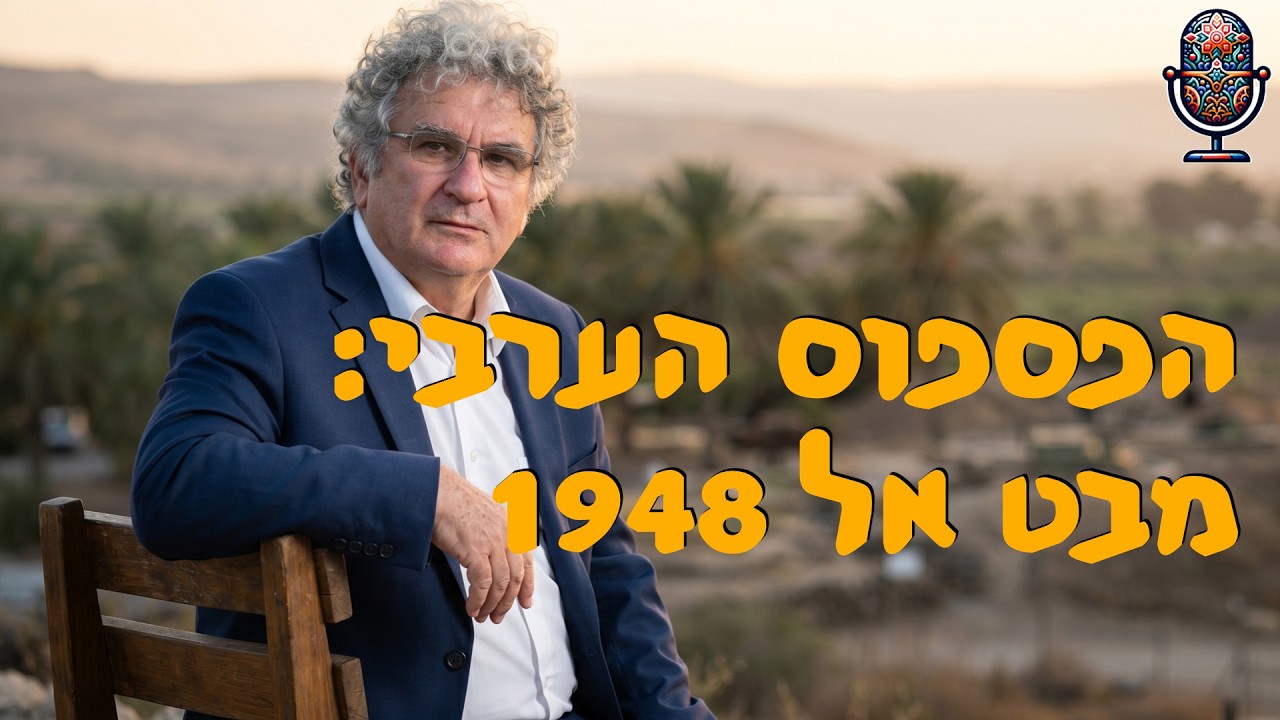
The Arab leadership in 1948: mistakes, opportunities, and consequences
In this episode, Boris Gorelik speaks with historian Prof. Benny Morris, a professor emeritus at Ben-Gurion University. The conversation provides a historical analysis of the decisions made by the Arab leadership in Palestine in the late 1940s, examines whether they had better alternatives, and discusses the consequences of those decisions on the Israeli-Palestinian conflict to this day.
-
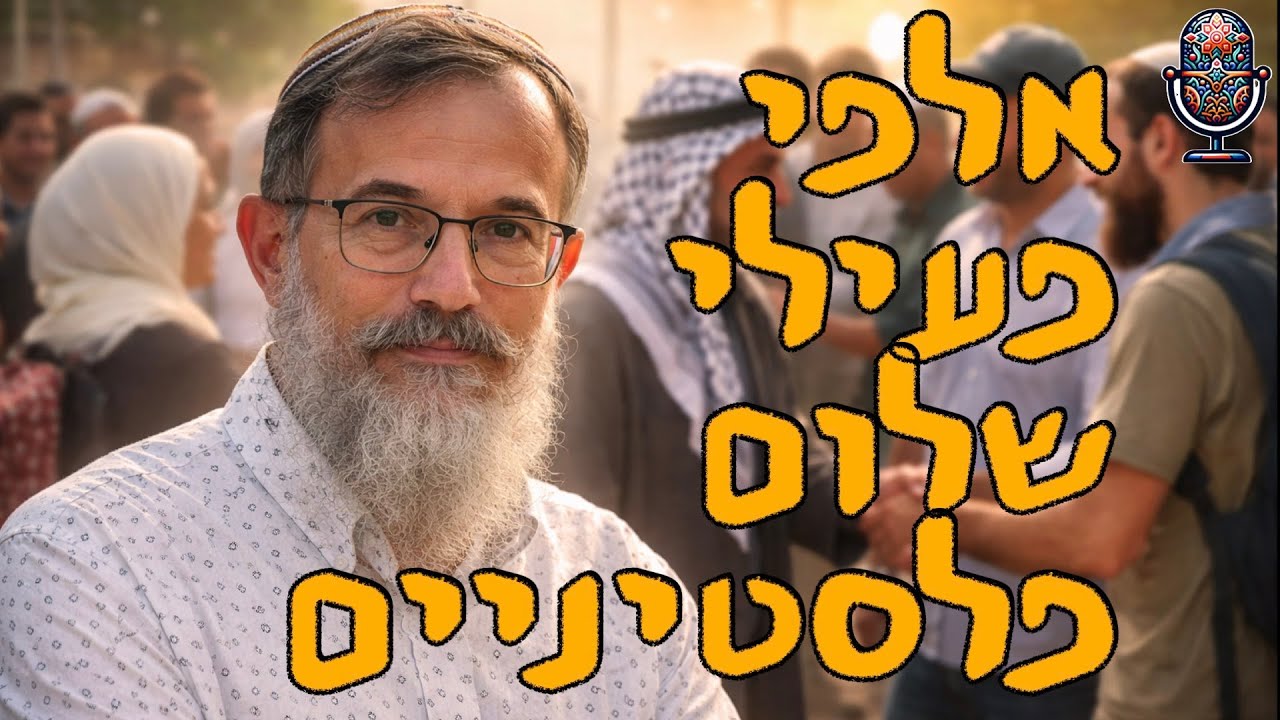
Rabbi Hanan Schlesinger on encounters between settlers and Palestinians
In this episode, the guest is Rabbi Hanan Schlesinger, a co-founder of the "Roots Initiative", for a conversation about the initiative's activities which bring together Jews and Palestinians in Judea and Samaria. Rabbi Schlesinger, a settler and resident of Alon Shvut, talks about the personal process that led him to peace activism, presents his view on the roots of the conflict, and describes the organization's daily activities and his vision for the future.
-

Samer Sinijlawi on the path to peace
Boris Gorelik speaks with Samer Sinijlawi, a Palestinian political activist from Jerusalem and a member of Fatah. Sinijlawi argues that peace is a supreme Palestinian interest, and that the path to it involves building trust with the Israeli public, deep reform in the Palestinian leadership, and mutual recognition of the historical rights of both peoples. He presents a vision of a two-state solution based on common interests, reconciliation, and imagination.
-

A religious solution to a religious conflict
The episode hosts Yinon Dan Kehati, author of the book "Shma Yishmael" and a right-wing peace activist. In a conversation with Boris Gorelik, Kehati presents his approach to resolving the Israeli-Palestinian conflict, a solution with religious and theological roots based on using Islam's own sources.
-

The keffiyeh: from Arab fashion to political symbol
In this episode of "This Week in the Middle East," Dr. Yaron Friedman joins for a conversation about the history and meanings of the keffiyeh. Dr. Friedman reviews the different types of keffiyehs, their origins, the symbols woven into them, and the transformations the head covering underwent until it changed from a status symbol to a charged national and political symbol.
-

Yasser Abu Shabab and the dangerous experiment in Gaza
Dr. Harel Chorev, a senior researcher at the Moshe Dayan Center, is a guest on the podcast to discuss the emergence of Yasser Abu Shabab, a local figure in the Gaza Strip who is cooperating with Israel, and to examine the broader strategy of relying on local clans for the day after Hamas.
-

Dr. Adi Schwartz: The path to victory is through changing Palestinian ideology
In this follow-up episode, Dr. Adi Schwartz, co-author of the book "October Seventh" (with Dr. Einat Wilf), returns to present his vision for resolving the conflict. After diagnosing the roots of the conflict in the previous episode, Schwartz this time focuses on the question of what to do and what practical alternative Israel should promote.
-

The October 7th war: The continuation of the idea of return
The episode features Dr. Adi Schwartz, a research fellow at the Misgav Institute and the Ben-Gurion Research Institute, and the co-author of the books "The War of Return" and the new sequel, "The October 7th War". According to Schwartz, the October 7th attack is not a new event in its essence, but rather another manifestation, a particularly cruel and tragic one, of the Palestinian idea of return, which has been at the heart of the conflict for a hundred years.
-

Samer Sinijlawi on Palestinian public opinion, the post-Abbas leadership, and the two-state solution
The episode features Samer Sinijlawi, a Palestinian political activist who defines himself as a member of the Fatah opposition. In the conversation, Sinijlawi explains why he believes it is important to speak to the Israeli public, analyzes Palestinian public opinion after the events of October 7, and describes the leadership change he thinks is necessary on the Palestinian side to move toward a solution.
-

A simulation of a regional peace conference
The episode features Dr. Ironit Levin Schnur, a senior lecturer at the Faculty of Law at Tel Aviv University. The conversation is about a simulation of a regional peace conference, "Riyadh Summit 2025," which was held at Tel Aviv University and tried to simulate a future meeting between leaders from the Middle East. Dr. Levin Schnur, one of the event's organizers, explains the simulation's goals, its methodology, and the insights that emerged from it.
-

Who was Izz ad-Din al-Qassam?
In this episode, Dr. Yaron Friedman joins the podcast to tell the story of Izz ad-Din al-Qassam, the man for whom Hamas's military wing is named. The conversation follows the life of al-Qassam, a cleric born in Syria who became a Palestinian national symbol, and examines the reasons that led Hamas to adopt his figure in particular.
-

Operation 'Homeland Shield': The Palestinian Authority fights for Jenin
In this episode of "This Week in the Middle East", Boris Gorelik hosts Dr. Mor Shapiro, a lecturer in Arabic at Bar-Ilan University and a researcher at the Mitvim Institute. The two discuss the unprecedented security operation launched by the Palestinian Authority in the Jenin refugee camp, aiming to restore its governance in an area considered the terror capital of the West Bank.
-

National trauma, constitutions, and October 7
This episode of This Week in the Middle East hosts Professor Gad Yair, a sociologist from the Hebrew University, for a conversation about the connection between national traumas and constitutions or founding documents. The conversation, held against the backdrop of the October 7 events, examines how traumas shape the identity of peoples and their laws, and what the consequences of the current trauma might be for Israeli and Palestinian society.