Tag: Security and intelligence
-
The gambler's dilemma and ending wars
In this episode, the guest is Amar Dank, a researcher of war termination, for a conversation about how leaders make decisions on continuing or ending a military conflict. The discussion focuses on the concept of the "gambler's dilemma," taken from Kahneman and Tversky's prospect theory, and examines how loss aversion can lead leaders to continue and escalate wars in the hope of erasing prior losses, even at the cost of taking greater risks. The model is applied to the Russia-Ukraine war, the "Swords of Iron" war, and the conflict with Iran.
-

The Palmar: The IDF's medical evacuation revolution
In this episode, the guest is Dr. Tuvia Buk, a reserve first sergeant, combat medic, and author of the book "Heroes of Palmar". The episode is about the Palmar (Plugat Marpe, or Medical Company), an innovative medical evacuation unit in the IDF, and the revolution it has brought to combat medicine. Dr. Buk talks about the unit's activity in the "Swords of Iron" war, the technologies it uses, and the human challenges its members face.
-

From mistress to common-law wife: A history of Israel's secret relations
This episode's guest is Prof. Eli Podeh of the Department of Islamic and Middle Eastern Studies at the Hebrew University and a member of the Mitvim Institute. Prof. Podeh surveys the history of the secret ties Israel maintains with Arab and Islamic states, a topic he wrote about in his book "From Mistress to Common-Law Wife." He explains why many countries preferred to maintain relations under the radar, why Israel agreed to this, and how the Abraham Accords and the October 7th war have affected this pattern of relations.
-

Secret contacts in the Middle East
This episode's guest is Dr. Haim Koren, a veteran diplomat from Reichman University who served as Israel's ambassador to Egypt and South Sudan. The episode discusses the mechanisms for establishing initial ties between hostile states, and how secret contacts mature into diplomatic relations. The discussion follows a report of a secret meeting between the head of the Mossad and the Syrian foreign minister.
-

The October 7 events in the mirror of Palestinian cinema
This episode's guest is Lt. Col. (res.) Avi Shalev, author of the book "Yoman al-Qasmi" and a researcher of Arab culture. Shalev analyzes the October 7 events through the prism of a Palestinian television series titled "Qabdat al-Ahrar," which aired about a year and a half before the attack. According to him, the series not only offered a chilling prediction of the attack's details, but also exposes the depth of the Israeli intelligence failure, which stemmed from a profound cultural misunderstanding of Palestinian society and Hamas.
-

The Iran-Iraq War: Causes, course, and consequences
The episode features Colonel (ret.) Pesach Malovany, a former Aman officer and a researcher of Arab armies, for a conversation about the Iran-Iraq War. Malovany, author of the books "The Wars of Modern Babylon," "From the North Evil Shall Break Forth," and others, served as an Aman officer dealing with Iraq at the beginning of the war. In the conversation, he analyzes the reasons for the outbreak of the war, which was the longest in the Middle East in the 20th century, its main developments, and its outcomes.
-
Pakistan, the bomb, and the Middle East
The episode features Dr. Nir Reichental, an expert on Pakistan and nuclear non-proliferation. The conversation covers the history of Pakistan, the circumstances that led it to become a nuclear power, and the complex interests guiding it today, as it finds itself in the role of the main mediator between Iran and the United States.
-

Syria after Assad: Israel's next enemy?
In this episode of "This Week in the Middle East," Dr. Yaron Friedman analyzes the rise of the new regime in Syria, led by Ahmed al-Shara, known as al-Julani, and argues that Syria is rapidly becoming the next major threat to Israel. According to him, while Israel and the world are focused on the war against the Iranian axis, an equally dangerous jihadist enemy is forming beneath the surface on its northern border.
-
Eliminating the regime in Iran, not overthrowing it
In this episode, the guest is Middle East scholar and Iran expert Alex Grinberg. The conversation deals with the campaign against Iran, the future of the Islamic regime, and the question of who will declare the end of the war. Grinberg argues that the regime is not expected to fall officially, but rather to be gradually eliminated, and that Iran is expected to remain a unified country even on the day after.
-

The failure of the Gulf concept: Qatar and the Gulf states at war
The episode features Dr. Ariel Admoni, a Qatar expert and a researcher at the Jerusalem Institute for Strategy and Security. The conversation deals with what Dr. Admoni calls the "failure of the Gulf concept." According to him, the recent war revealed that there is no unified Gulf bloc, and that the foreign and security policy of each country, especially Qatar, was tested in a way that undermined basic assumptions about the region's stability.
-

How do wars end?
In this episode, the guest is Omer Dank, a security researcher, to discuss the question of how wars come to an end. The conversation reviews the various ways wars have ended in the modern era, and examines the possible scenarios for the end of the current (hypothetical) war between the United States and Israel and Iran.
-

Iran's fake Battle of Karbala
This episode's guest is Dr. Yaron Friedman from the Department of Middle Eastern Studies at the University of Haifa. The conversation deals with Iran's parade of strategic mistakes, which Dr. Friedman likens to a modern, but fake, Battle of Karbala. According to him, this is a pre-lost war that the Iranian leadership entered after believing its own propaganda.
-
Upgrading the alliance: Israel and the United States in an era of great power competition
In this episode, Nitzan David Fuchs, host of the podcast "The Great Game", joins the discussion on strategic aspects of Israel-US relations. Fuchs argues that Israel should change its perspective on the alliance and focus on how it can contribute to the United States, not just on what it can receive from it. According to him, such a change would allow Israel to upgrade its status, strengthen the alliance, and better deal with its regional challenges.
-

Naval lessons from the war in Ukraine
This episode features Professor Shaul Chorev, head of the Maritime Policy and Strategy Research Center at the National Center for Blue Economy and Innovation in Haifa. The conversation covers the lessons from naval warfare in the Russia-Ukraine war, with an emphasis on asymmetric warfare, the use of uncrewed vehicles, and the strategic implications for Israel and the Middle East.
-

The Islamic Republic: Is the regime on the verge of collapse?
This episode's guest is Alex Grinberg, an Iran scholar at the Jerusalem Institute for Strategy and Security (JISS). The conversation deals with the recent protests in Iran, examining the stability of the Islamic regime, the chances of its collapse, and the factors influencing this, including the economic situation, national identity and ethnic minorities, and external pressures.
-

Recognition of Somaliland: Interests, risks, and a changing world order
This episode's guest is Dr. Haim Koren, former Israeli ambassador to South Sudan and Egypt and currently a lecturer at Reichman University. The conversation deals with Israel's recognition of Somaliland, a state entity that split from Somalia about 30 years ago. Dr. Koren analyzes the historical and geopolitical background of the region, the strategic interests of Israel and other powers, and the possible implications of the move.
-

Artificial intelligence, fake news, and the narrative in the Middle East
This episode of This Week in the Middle East features Mor Shapira, a lecturer at Bar-Ilan University and a researcher of Arab media at the MEMRI institute. The conversation deals with the growing use of artificial intelligence (AI) and the spread of fake news in the Arab world. It examines how these technologies affect politics, religion, and society in the Middle East, especially in the context of the current war.
-

Heroism on the battlefield
In this episode, Dr. Yagil Henkin, a military historian and a researcher at the Jerusalem Institute for Strategy and Security, joins the podcast to discuss the nature of heroism in armed conflicts. The conversation covers the definitions of heroism, its expressions in the modern era, its moral context, and the ways it is commemorated.
-

The October 7 atrocities exhibit
This episode is a conversation with Lieutenant Colonel (res.) Yuval Leikin, who was responsible for creating the October 7 atrocities exhibit. Leikin describes the process of collecting the materials, the moral and practical challenges, and the insights that arose from dealing with the atrocities and the motives of their perpetrators.
-

Qatar-U.S. relations: An American base and money for Hamas
In this episode, Dr. Ariel Admoni, a researcher specializing in Qatar, joins the show to discuss the complex and intricate relationship between Qatar and the United States. On one hand, Qatar is home to the forward headquarters of the U.S. Central Command (USCENTCOM), the largest American base in the Middle East. On the other hand, Qatar funds activities and organizations, including Hamas and the Taliban, that work against the interests and values of the United States. Dr. Admoni outlines the historical development of the relationship between the two countries and explains how Qatar has made itself an essential strategic asset for Washington.
-
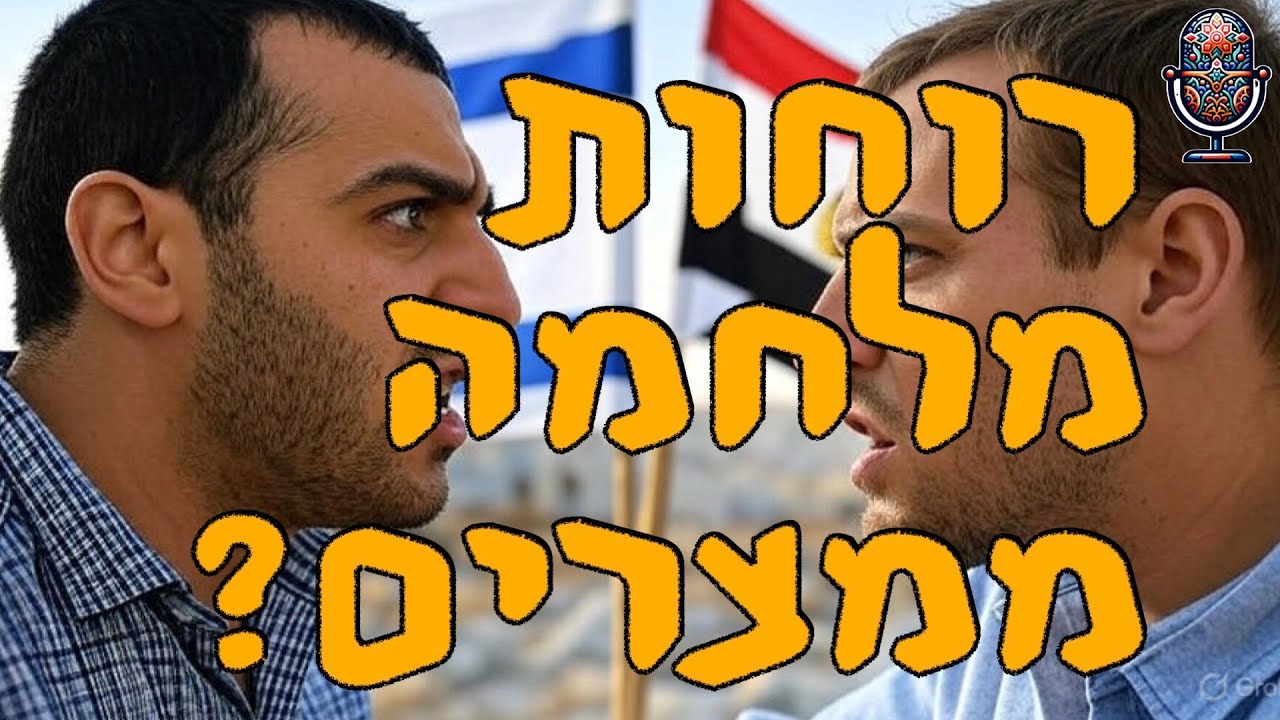
Egypt and Israel: Is there a danger of war?
The episode's guest is Middle East scholar, former Knesset member, and research fellow at Chatham House, Dr. Ksenia Svetlova. The conversation deals with reports of an Egyptian military buildup in the Sinai Peninsula, and examines the question of whether Israel is indeed facing a threat of war from its southern neighbor. Svetlova argues that there is no real evidence of Egyptian preparations for war, and that the reports on the subject are part of a political campaign.
-

The Israeli strike in Doha and the reactions in the Arab world
In this episode, Dr. Yaron Friedman joins the show to discuss the Israeli airstrike in Doha, the capital of Qatar, which targeted senior Hamas officials. The conversation, recorded shortly after the strike, deals with the reactions in the Arab world, the diplomatic implications of the operation, and Qatar's role as a host and financier of the terrorist organization.
-

Why the Iranians are not rebelling, and what it means for Syria
This episode's guest is Alex Grinberg, a Middle East scholar and researcher at the Jerusalem Institute for Strategy and Security. The conversation deals with the stability of the regime in Iran despite popular unrest, and moves on to analyze the collapse of the Assad regime in Syria as a basis for discussing power dynamics, alliances, and the required Israeli strategy in the new Middle East.
-

Dr. Daniel Sobelman on the Axis of Resistance and asymmetric warfare
This episode's guest is Dr. Daniel Sobelman, a lecturer in international relations at the Hebrew University and a research fellow at the Belfer Center at Harvard University. Dr. Sobelman, who recently published his book "The Axis of Resistance", explains the concept of asymmetric warfare, describes the development of the Axis of Resistance as a strategic community, and analyzes the effects of the current war on the axis and its perceptions.
-

The Iranian strategy: Espionage, cyber, and influence
The episode hosts Dr. Yael Finko, a former senior official in the defense establishment and currently a researcher at Bar-Ilan University and a cyber expert. The conversation deals with Iran's efforts to influence and spy on Israel, beyond the familiar military threats like missiles and proxy organizations. Finko analyzes Tehran's concept of "soft power," its methods in the fields of cyber and human espionage, and the psychology behind recruiting Israeli agents.
-

The air incident in Chechnya and the new order on the northern border
The episode features Alex Grinberg, an expert on Iran. The conversation begins with an incident in which an Azeri passenger plane was hit over Chechnya, and from there develops into a discussion about Russia's conduct, Azerbaijan's diplomacy, and the possible implications of Turkey's growing strength in Syria for Israel's northern border.